Natuashish – Aftermath
Now that my time in Natuashish is over, I’ve wondered how best to start my final words on the subject.
I’ve been very humbled by the amount of visitors my first post on the subject generated. Being picked up by the folks over at Labrador Wild was something I certainly never expected.
Thanks to all who have dropped by and for the private messages I’ve received. I’ll try and do this follow-up justice.
—-
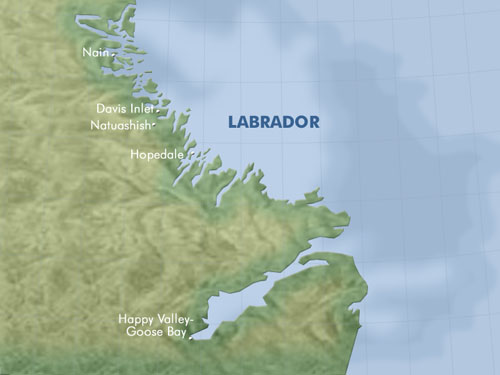
Right, so here again is Natuashish – in answer to complaints that I wasn’t very specific concerning it’s location. It is at 55 degrees latitude, not quite the arctic circle, but certainly farther North than I’d ever been, a roughly 10 degree increase in latitude over my home in Halifax, N.S.
Labrador uses Atlantic Standard Time, which was convenient for me.
My tenure there ran from Oct 25th to November 18th. Those of us sent there were working on a new Recreation Centre for the community. The hours were long – 13 hour shifts typically, and we worked every day.
That stretch was nothing nothing to some of the people the company sent there.. The original group were there for a total of 10 weeks – and save for the occasional sick day here and there, they worked every single day of it. My hat is off to them.
——
Two recent developments have added poignancy to this post for me, both of them ongoing.
For one, the ongoing story in Attawapiskat (summarized well here) relates in several ways to what occurred to the Mushuau Innu in Natuashish – and the Davis Inlet community that preceded it. There are many relevant and poignant stories to be found using terms like “Davis Inlet” or “Mushuau Innu” in the search engines. Two difficult to imagine, yet important ones for better understanding can be found here, and here.
While I will say that it is my belief that the problems Natuashish – and many other indigenous communities in Canada – face are directly related to promises that the Canadian and/or provincial governments broke (or didn’t deliver upon fully), I really prefer to focus on the positives that I saw first-hand.
Some good things are happening for Natuashish.
As in so many other challenged regions, a large focus has to be upon the children. Seems to me that if you give them something constructive to do, some viable options for them to spend their time upon, you might be able to help break the cycles that damaged previous generations. I’m not exactly qualified to weigh in on this too much, but thankfully professionals of all variety are on the ground there working with the community to improve things.
While the schools built in Natuashish face ongoing challenges, I did meet dedicated teachers there who want to make progress. Adding to that, there are other projects under way which will help provide the amenities and recreation that we enjoy in most typical Canadian communities.
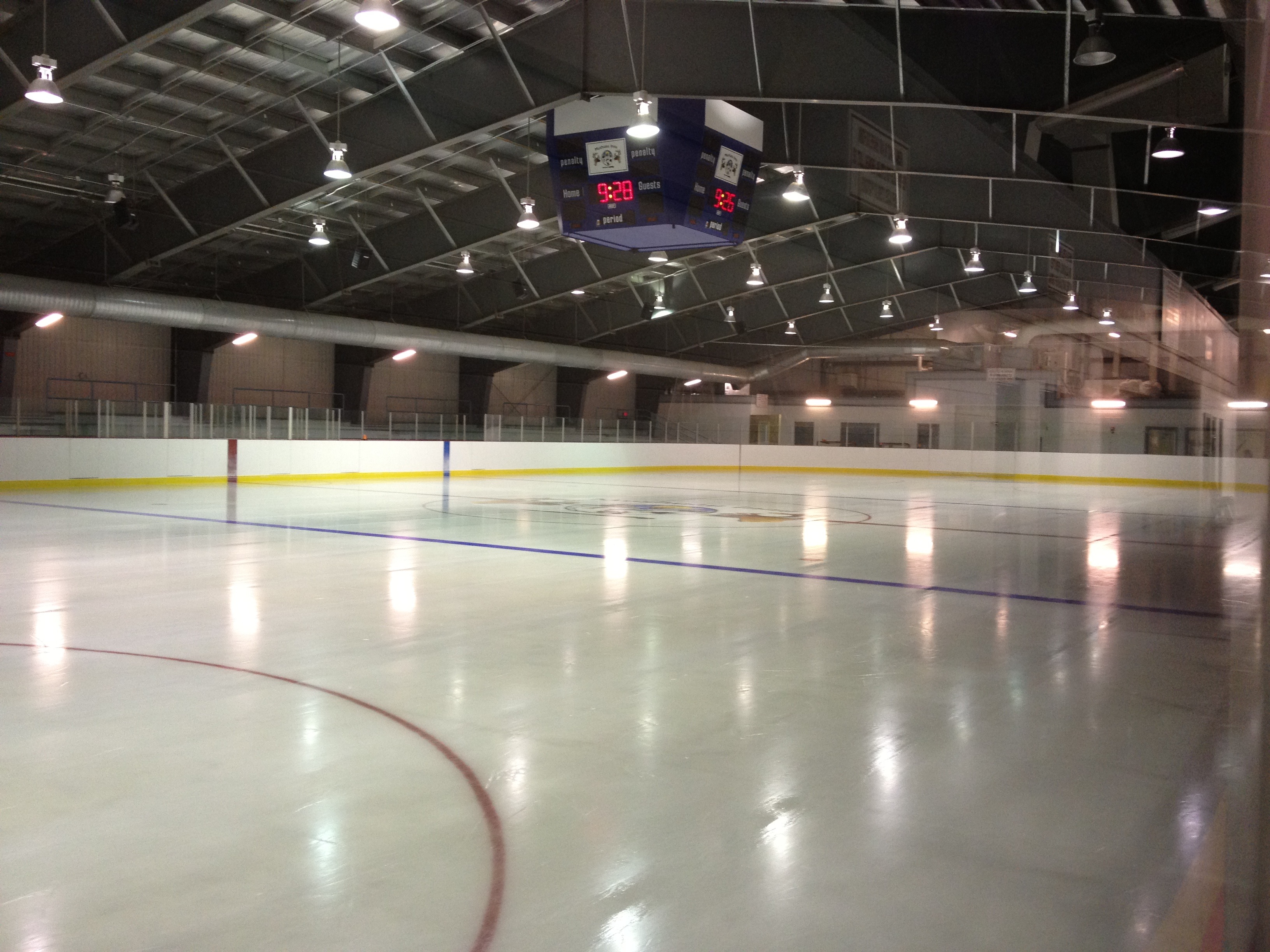
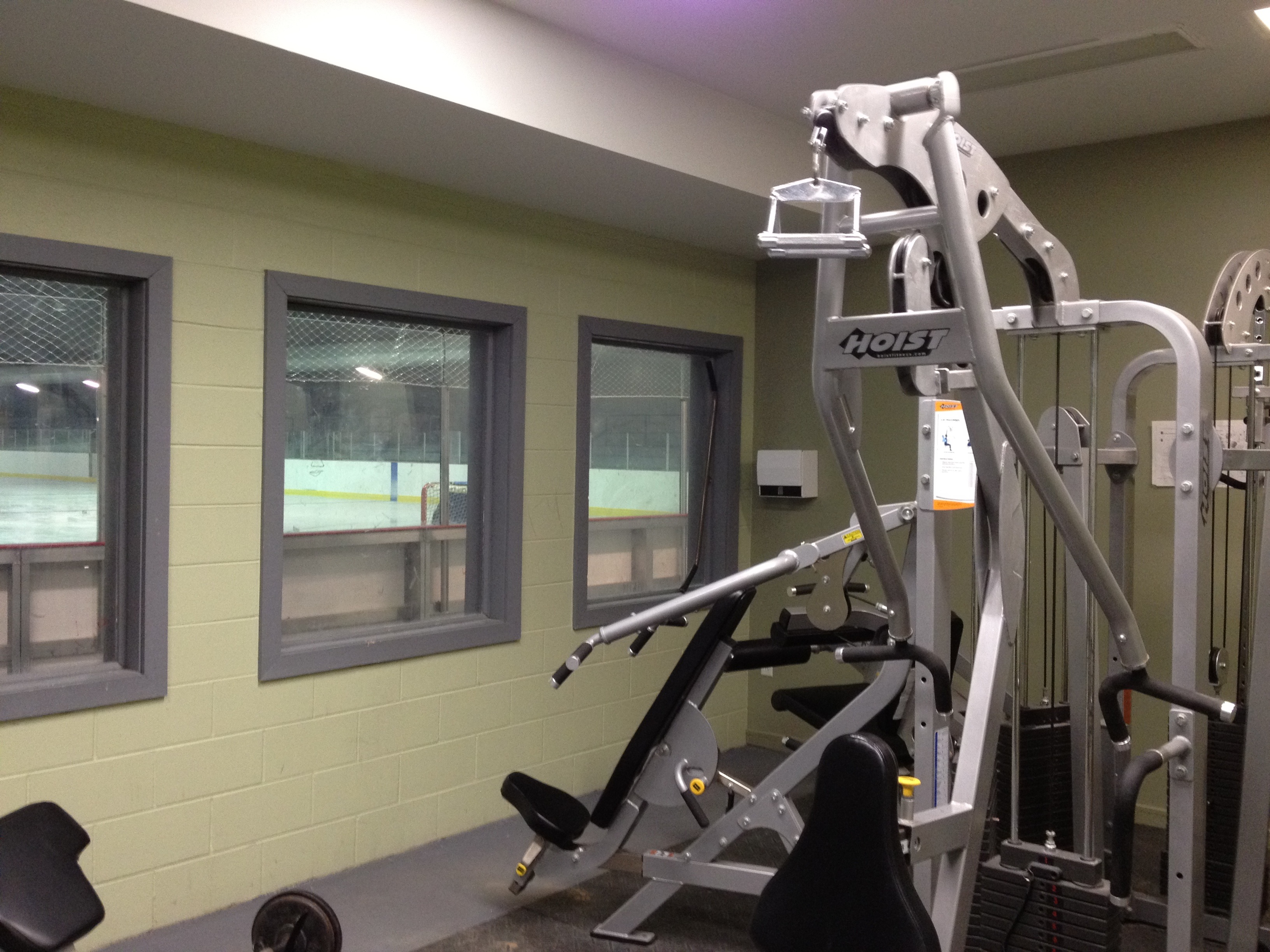
Completed a few years ago, a decent Ice rink exists in Natuashish. It contains all of the facilities you’d find at a typical community arena. There are local teams, and two coaches come into town on a rotation to help build skills. There is a league from what I understand, and the team hosts, as well as travels to other communities for games.
The rink is part of a larger recreation complex, an addition to which we were working upon during our time in the community.
——
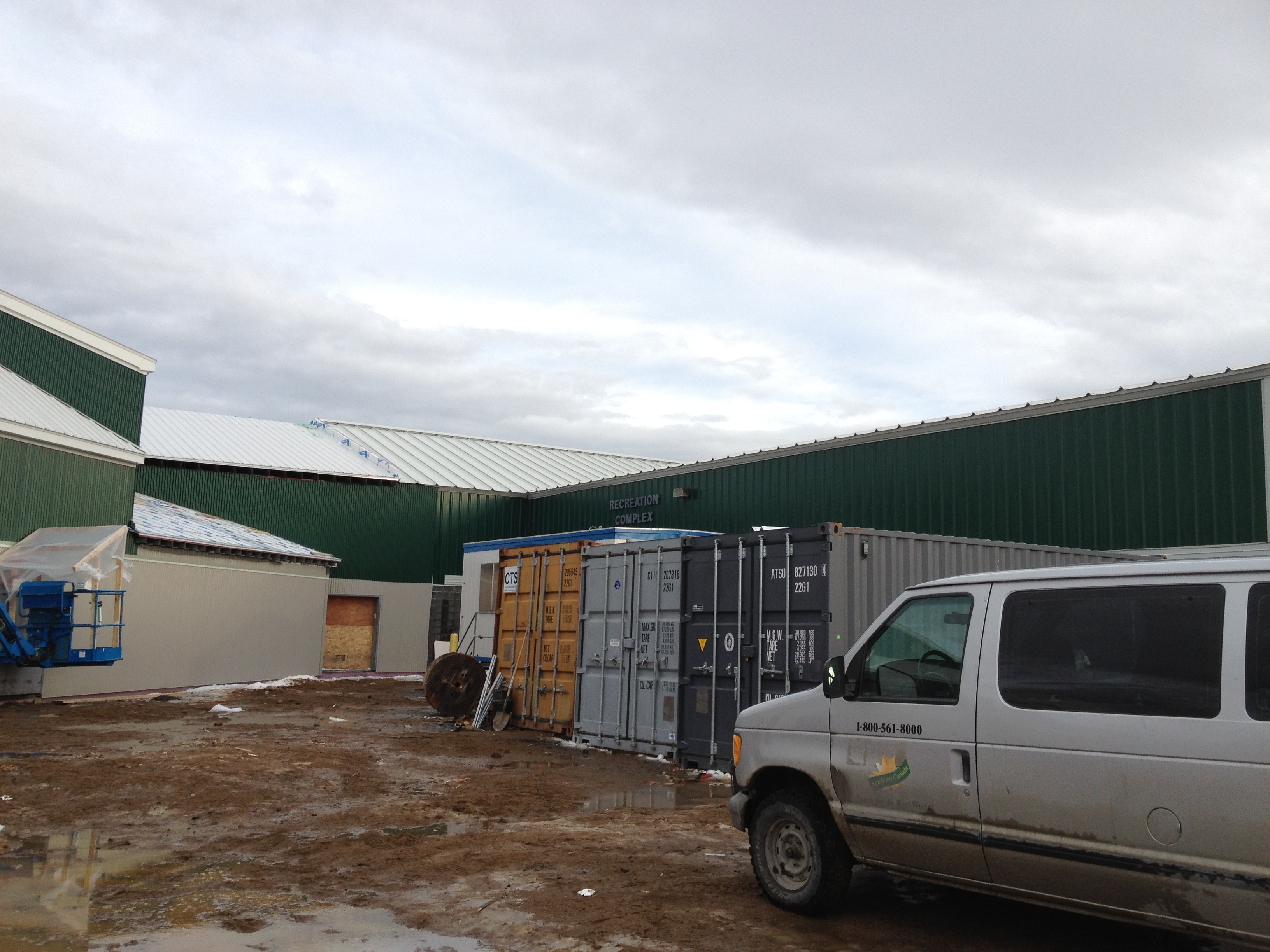
Lots of sand in Labrador..
There is an outside chance that I will return to Natuashish in 2012 to help on a project to build a number of new homes. I’ll certainly comment more on that if the situation does come about, but now I’ll speak a bit more about the experience of being in the community itself.
First of all, there are only two ways into Natuashish, by air and by sea.
Bulk cargo, supplies and fuel are shipped into the town’s port, while smaller cargo, residents and visitors fly into the local airport.
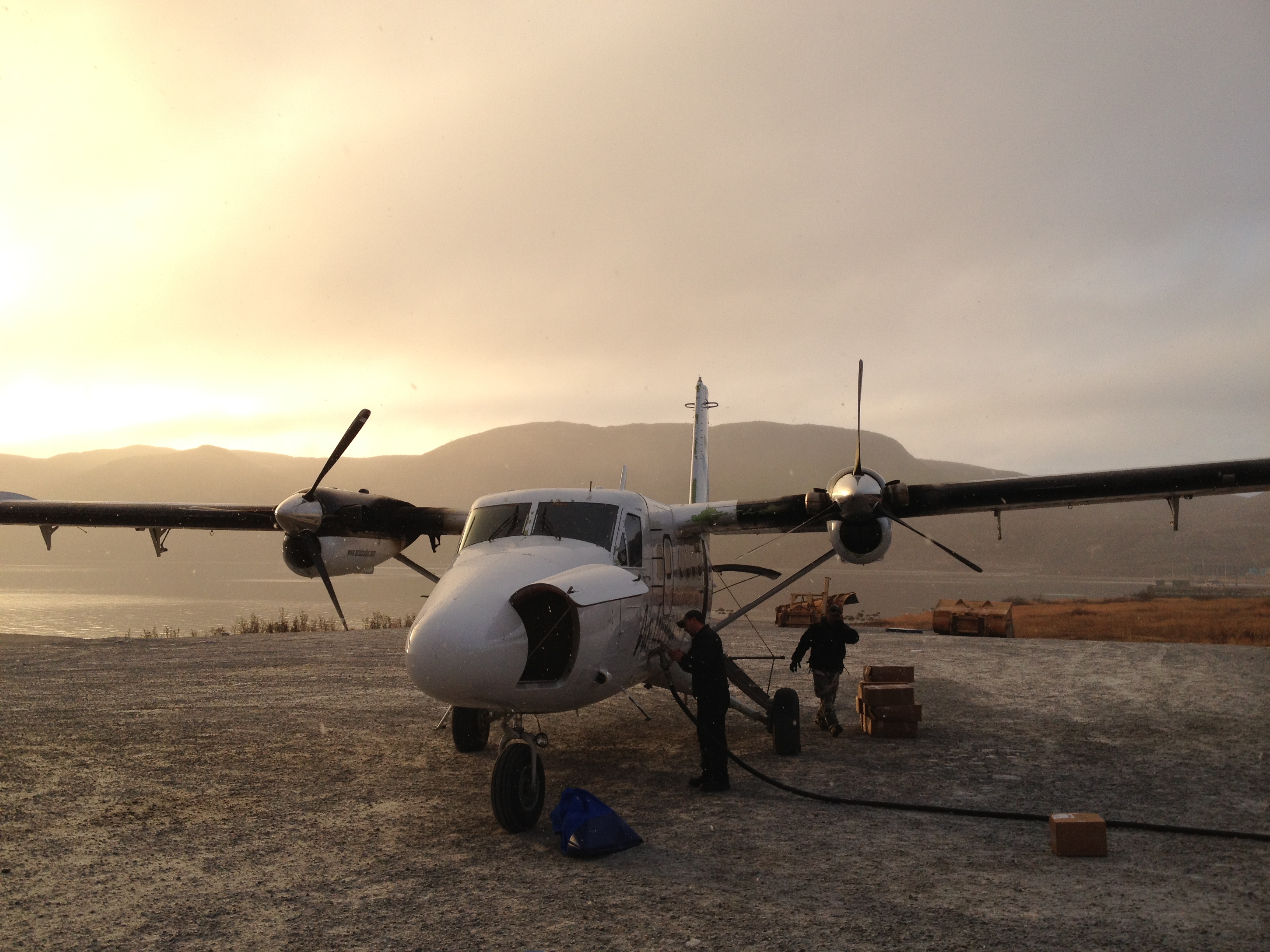
 Twin Otters are quite the aircraft. I had never flown in anything quite as small, and I gained some additional respect for the pilots who can get them in and out of small community airports, as if it were a walk in the park.
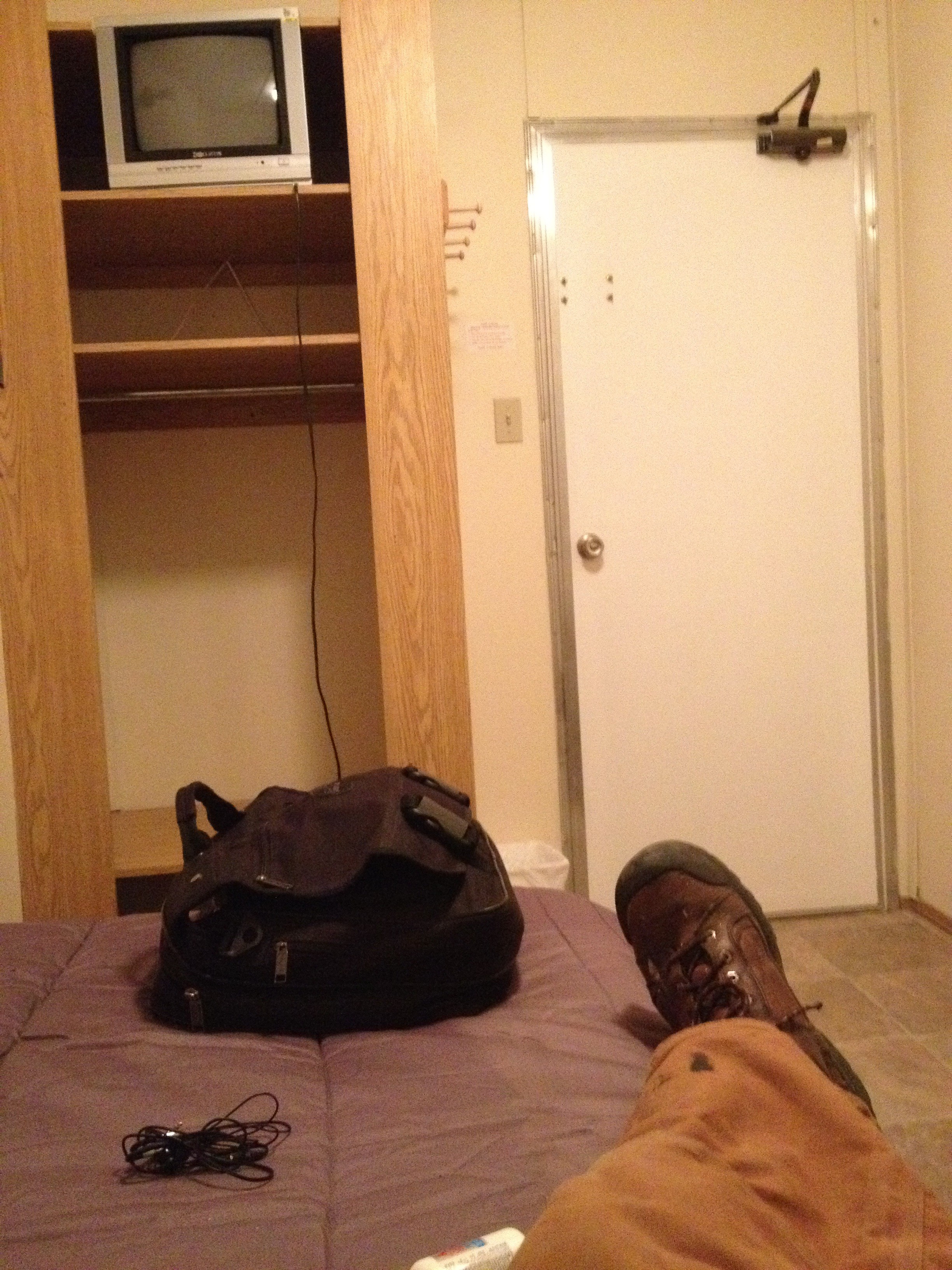
Our accommodations in the town consisted of a bunkhouse, one component of a complex that also included a general store, motel and cafeteria. We had private rooms, which were small but comfortable.
The cafeteria served as a bit of a games room after working hours. Some of the crew played Cribbage or “Chase the Ace” to pass the evenings occasionally. I’d join in once in awhile, but typically only came out for a snack or to watch hockey on the satellite-fed big screen television.
Most nights I relaxed in my room watching movies or television series’ I’d brought with my laptop for the journey. Considering the challenge of our work schedule, that was often enough for the couple of spare hours I had to myself.
I did make use of the gym facilities at the recreation complex occasionally however, and the few times we were able to use the ice were certainly fun.
——-
Considering that I left Halifax in late October with the temperature in the mid-teens, there was an adjustment to the weather in Natuashish.
The average temperature while I was there was around the freezing mark, with it dipping several degrees below often at night. Being on the coast of the Labrador Sea, we experienced some dampness and wind. It snowed or rained for a portion of almost every day.
Those conditions aren’t so difficult taken on their own, but the roofing and siding materials we were working with consisted of thin gauge steel – something you cannot work with effectively in the snow.
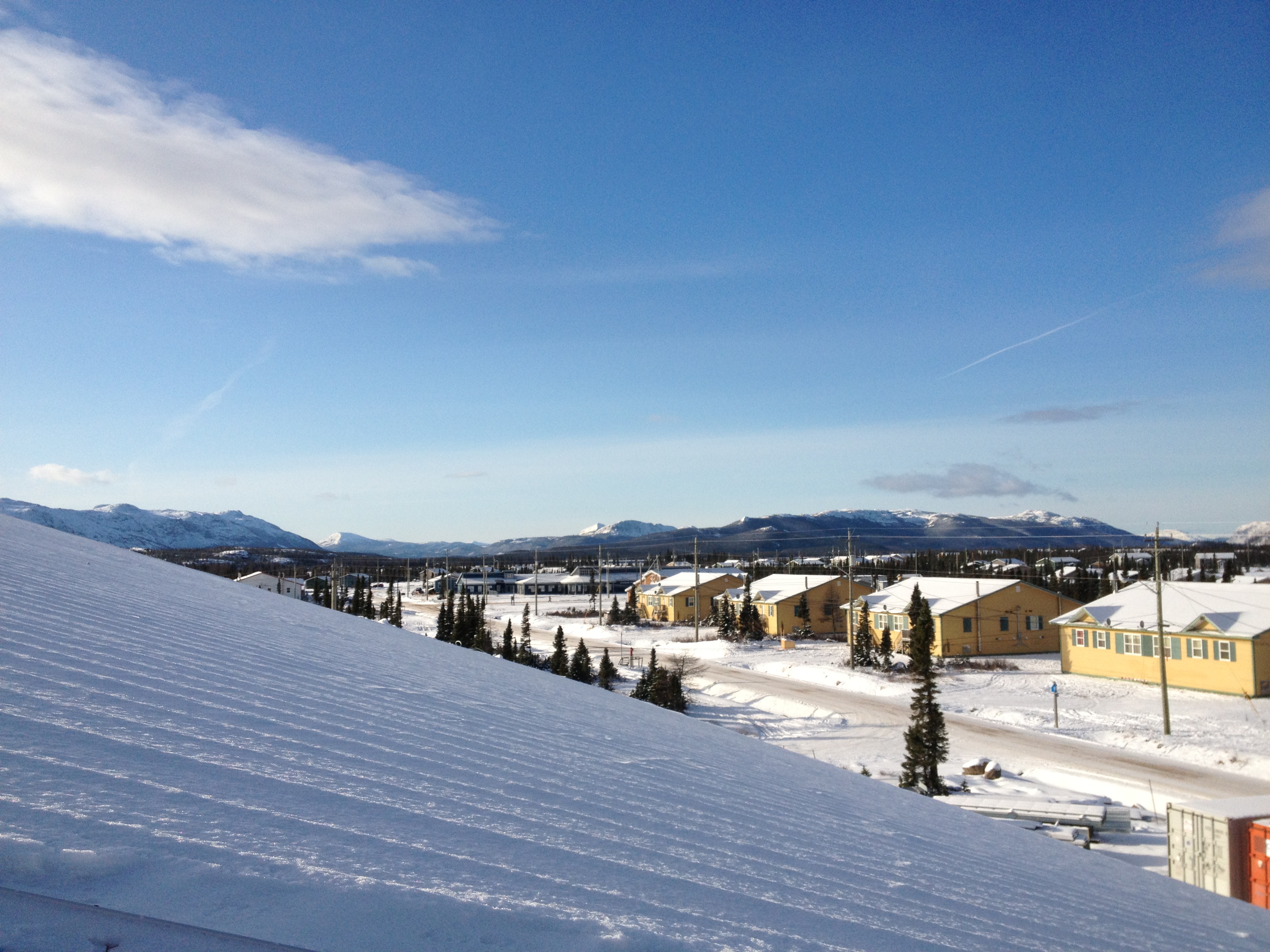
The foreman for our crew did a great job of coordinating our work to suit the conditions. This allowed our productivity to remain high, and ensured the work was of a good quality. Certainly the right person for the job.
——
Natuashish is not a place to be if you don’t like dogs. There are lots of them in town.
I’d guess there are at least 250 of them in the community, and many of them are free to wander. Ownership seems to be loosely defined.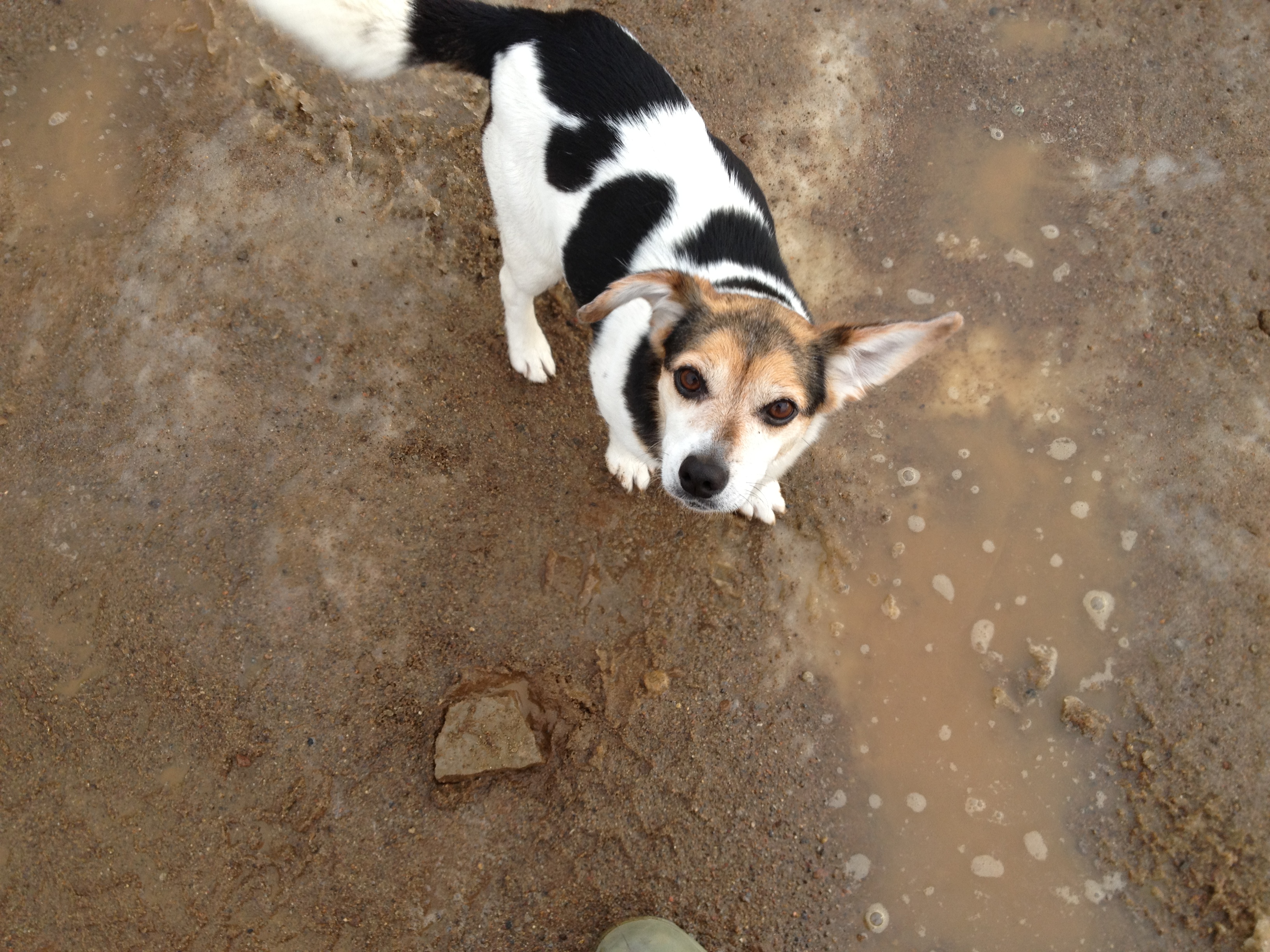
Mostly it seems to be Huskies, but there are many breeds of dog there – some of which don’t necessarily seem well suited for the winter weather.
Occasionally authorities remove some in cases of illness or aggressive behaviour – but most of the dogs seem fairly tame.
Our job site was no exception to this. Over the few weeks that we were there, no less than dozen dogs visited with us, some repeatedly.
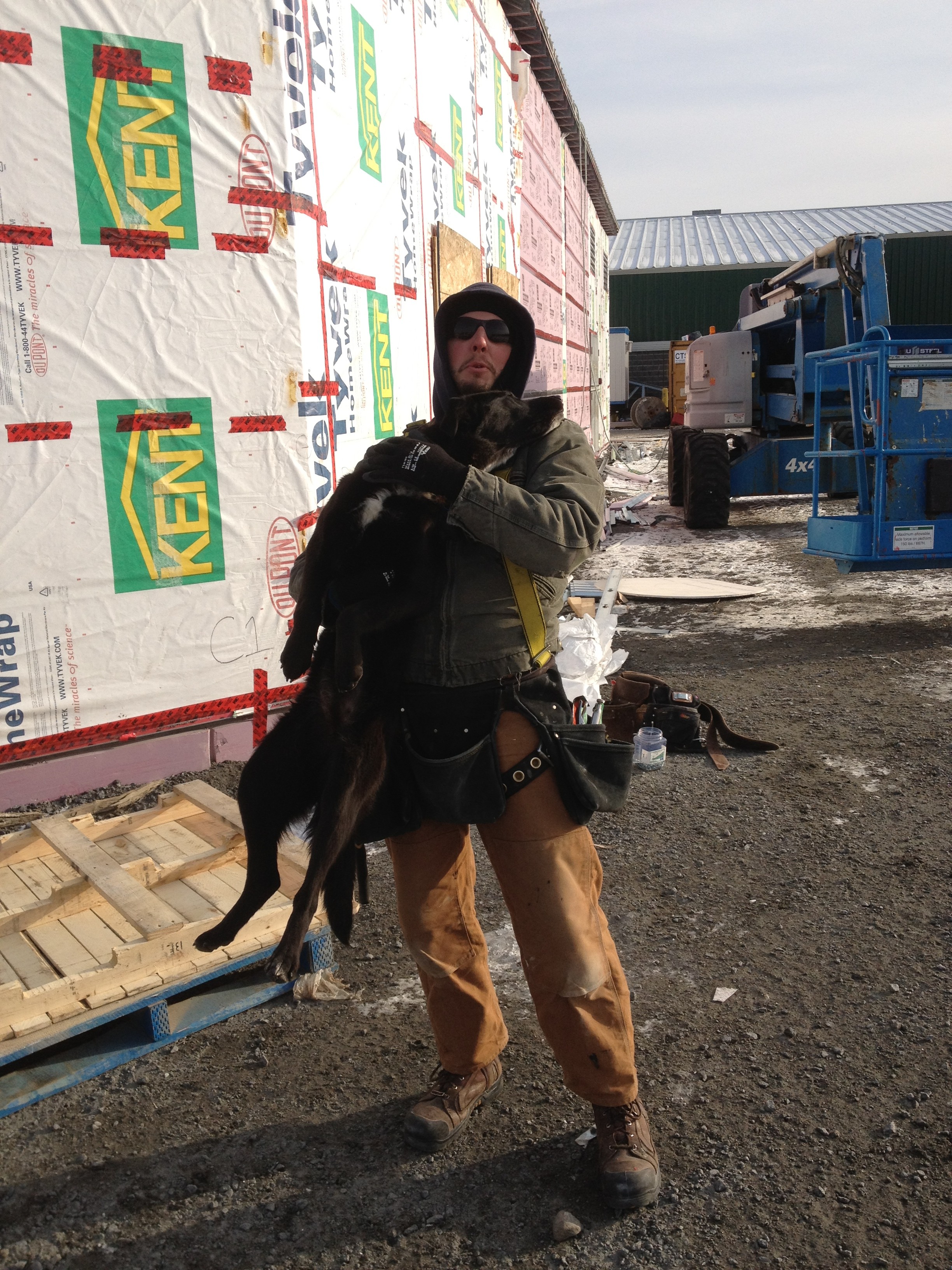 They figured out we were easy marks to score a meal from. Many of them benefited from food we would bring back for them from the cafeteria after lunch and supper.
——–
Evenings on site were certainly eventful, and posed a challenge for the crew.
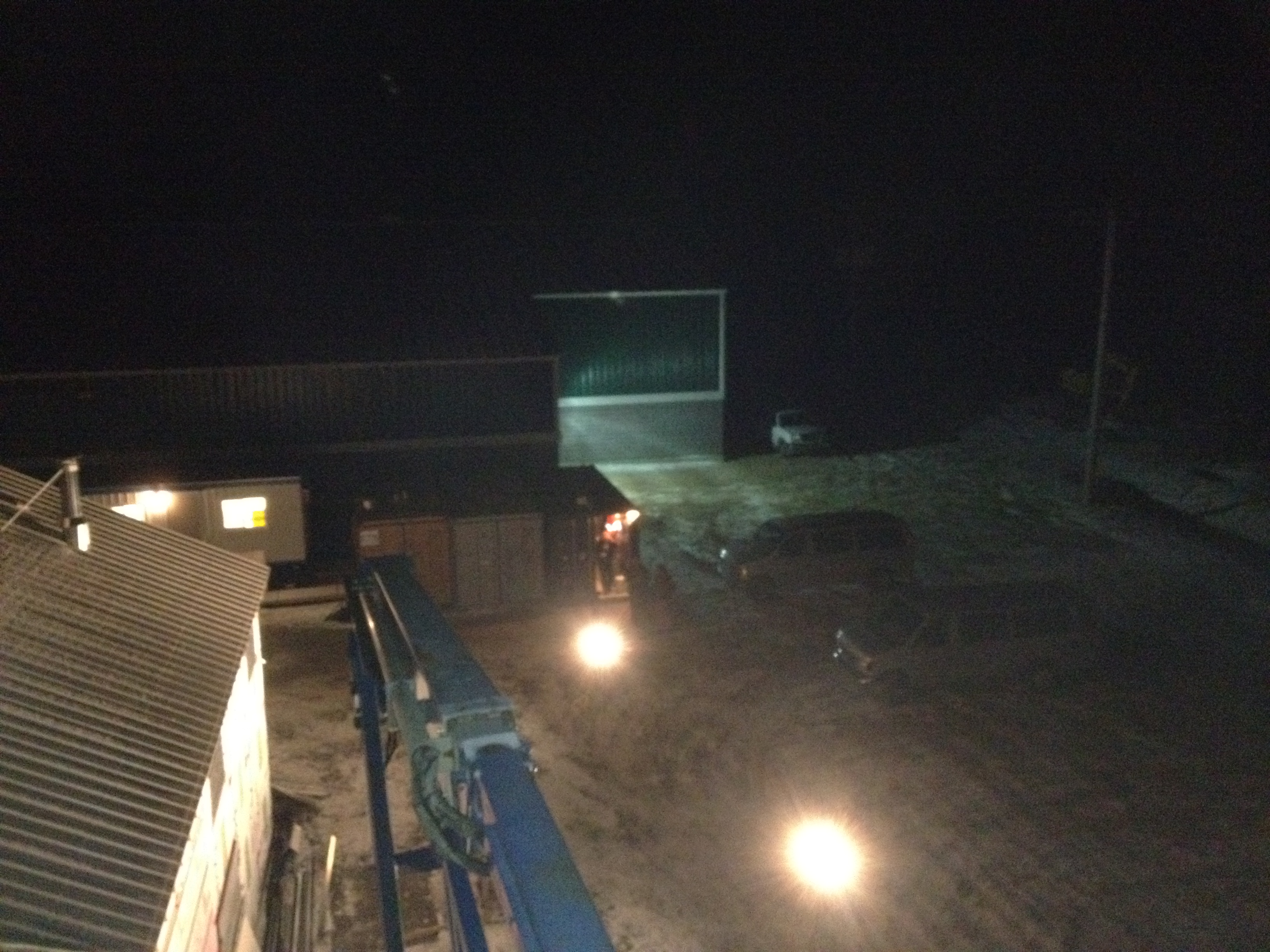
Considering our latitude, daylight hours were certainly shorter than in Halifax. The effect of this was intensified for us when Daylight Savings Time came to an end. At that point sunset was typically around 4:30pm.
We would leave for Supper at 5pm, returning quickly to set up flood lights and do our best to remain productive. We would save certain procedures for the evening hours, in order to remain safe. Use of the lifts and machinery was limited, what work we could do at ground level, we saved for the evenings.
Another challenge with the evening work was the children.
The adjacent arena complex had various programs and skates for all ages, which would naturally attract a good number of families and children.
Some of them found it great fun to visit the site, enter the building we were working upon, and run around.
While this was for the most part harmless, we obviously had a responsibility to ensure the safety of people on site. It was a regular event for several of the crew to have to stop and chaperone the kids, explaining what we were doing, and ushering them safely away from the machines and materials.
They are a fearless bunch, not much we were up to scared them. They would have hopped right into the lifts with us and tried to use the power tools.
——
Getting back to events that added some relevance to this post – it’s worth mentioning the recent agreement that’s bound to have a huge effect on Labrador’s Innu, the New Dawn deal.
This agreement works to provide the Innu Nation in Labrador with a percentage of profits from the upcoming Muskrat Falls hydroelectric project (which is certainly of interest to Nova Scotians as well), and other compensation for the flooding of hunting lands during construction of the original Churchill Falls facility.
Other benefits of the New Dawn deal include title to a significant amount of land, hunting and fishing rights on even more.
Some worry about the effect the influx of money will have. One can only hope the work that is taking place in the communities now will help ensure wise decisions are made which will benefit the residents in the long term.
Thing is, there are a lot of indigenous communities in Canada that are in trouble. The news being made in Attawapiskat may just be the beginning. I have a feeling we are going to hear about several other communities also facing crisis in the upcoming months and years.
While I don’t necessarily believe it’s appropriate or fair to compare any two indigenous communities – especially when it involves different nations and cultures – government treatment (mistreatment) over the years often has been the same.
Perhaps the lessons being learned now in Natuashish, what works, what doesn’t, and the skills administrators and professionals of all stripes are learning as they go will better prepare those who would help out other communities in need.
Something tells me I just may find myself in a similar situation again in the future, after all.
 Haliflux - Discovery and evolution in Halifax NS
Stumbled across this while looking up natuashish. I was on your crew buddy. Brings back memories