Nothing researched, all pretty much off the cuff.
I have a couple draft posts I haven’t touched in months, since my paying work has taken off.
Felt I had better post something, as the site still receives it’s loyal following of spambots, and maybe more importantly, I still 7 months left of this domain being paid for!
I’m hearing from a lot of people that things are “slow” on the residential side, and even slower than last year (“..and the year before at this time). These are residential guys, mind you.
Not sure about commercial. I haven’t looked at data, haven’t tried to analyse media reports.
It seems to me that things keep on keeping on. Not too high, not too low. Typical Nova Scotia.
Of course there are several larger projects going on in the city, and the Federal government is going with the budget that’s pretty much status quo as far as matching provincial and municipal funding levels on infrastructure projects and such.
Half through the fed’s current mandate, with the conservatives still drying to duck the F35 heat, and content to let the media focus on the Liberals and Justin Trudeau for several months, I expect it will be a bit before anything dramatic shakes things up.
My hunch is that the initial speculation and bustle of residential activity in the wake of the shipbuilding announcement is beginning to wane somewhat, but the commercial stuff – which tends to drag out over a few years – as far as large projects are concerned – seems to be steady. I want to look into commercial starts soon. That will tell me a little more.
Still no final plans for these ships nags a bit. When will steel be cut at the shipyards?
I’d love to see what comes out of the Cogswell interchange forums and debates. A nice thing for our fairly new Mayor to focus on, lets some time pass while he adjusts to the gig, and generally will only get passing interest from the majority of citizens. Maybe gets a chance to make a few people happy, whilst avoiding pissing off thousands.
All I know is spring better arrive soon. I bought an old beater with a sunroof, and I’d like to open it without requiring the heater soon.
There has been much news recently concerning employment and jobs in Halifax..
Teachers laid off.
Shortage of Skilled Labour.
Ship Building Contract.
Ship Building Workers laid off.
Reduction in services and civil servant layoffs.
Average age of Nurses rising, retirement ages pushed upward.
The list goes on, and more is added to it every day. What exactly is happening, and why? What will it mean going forward? I’ll take a crack at it..
Feds:
Actions occur on a national level – be it civil servant or large corporation layoffs. Those actions have lasting repercussions here – The local economy simmers down. The flow of money into provincial and municipal coffers slows. That leads to provincial government layoffs, local business suffers – The potential for real, long-term difficulty exists.
It’s hard to say if the federal Conservative government is responding logically to the economic crises of a few years back while trying to re-balance the budget; or if they are merely following their well-known preference for small government and out-sourced (privatized) services. Probably both.
Whatever the reasons, the results are the same, jobs are being shed. One recent example being Fisheries layoffs, with nothing apparently off-limits as you can see here.
Nova Scotia Gov’t:
Provincially, the NDP have made some interesting choices lately. Loaning Irving $304 Million Dollars, but not saying why. Then Irving lays off 44 workers. Certainly it’s been shown that the work on the shipbuilding contract isn’t going to start immediately, but those two events combined certainly haven’t gone over well with Nova Scotia taxpayers. Hopefully it doesn’t foreshadow future disappointment.
Halifax:
Here in Halifax, we have the news that the Halifax regional school board is cutting 154 teachers, due to provincial and municipal funding cuts.
With increasing numbers of students requiring individual program plans and curriculum that continues to evolve – among other things – our education system needs more resources and teachers, not less.
I think it’s worth noting that these type of actions don’t happen in a vacuum. Just as the actions the federal government takes affect us from the top down; now we have actions that will rise from education cuts to potentially hurt us in the long term.
The means to educate and prepare young people for an increasingly competitive workplace is compromised.
The stories coming out of Capital Health aren’t encouraging either. No funds to hire additional nurses, while their average ages increase. An interesting glimpse here at overtime costs.
———————————————————————————————————————————————————
So the makeup of the local job market is in flux. Government funded jobs (from all levels) are on the decline.
On the other hand demographics show there are demands in other areas, with the retirement of boomers. The 2011 census shows Nova Scotia is the “oldest” province. More on that here.
There are simply not enough young workers in skilled trades to replace those who are close to retirement.
The provincial government is negotiating with federal counterparts to increase the number of skilled immigrants they can allow directly. The feds want N.S. to modify it’s immigration programs to better reflect the skilled-labour and professional needs; while they are revising national programs and policies. The bottom line, is that NS won’t be able to increase the number of immigrants which it needs to fill holes in the labour market in the short term.
Looking at Temporary Foreign Workers:
The TFW program doesn’t afford it’s workers the same rights Canadian workers enjoy. They often fill jobs that many citizens won’t, due to low wages or due to their seasonal nature. A statistic worth taking note of: Temporary Foreign Workers account for 29% of all full time positions created in Canada over the past four years.
This is worth watching.
In both the U.S. and Canada, actions have been taken recently in the name of fiscal restraint and managing the fragile economy in recovery.
Problem is, many of those actions seem to have come down at the expense of the very workers we need. Back to work legislation seems to be an automated response by governments, and many jurisdictions (mainly in the U.S. to this point, mind you) have been passing legislation that weakens unionized workers.
———————————————————————————————————————————-
After looking at these various points, a conclusion isn’t so easy to draw. Adding it all up however, I am not convinced that we are going to experience a major boom here in Halifax, or in Nova Scotia overall. We’re not going to look like Alberta – or St. John’s for that matter – anytime soon.
I feel skilled trades might be the only sector of employment that will remain healthy in the short to mid term. Yet I also feel that we’ll be lucky if wages and benefits for those working in trades keep pace with inflation. If they do, it may be because the construction demands in Halifax lead to higher wages being paid to attract or keep workers here.
..but will that be the case if demand is met with temporary foreign workers who aren’t afforded the same levels of pay or the same rights as Canadian citizens? No mention of what’s on the horizon for citizen and worker rights – that would just be depressing.
If your son or daughter isn’t training to be a doctor or a lawyer – willing to take the “hometown discount” (after paying the highest tuition in the country) I might be nudging them towards a skilled trade that is experiencing a shortage.
Might be the best way to make a living here in the not-too-distant future.
It’s been six months, since the awarding of the shipbuilding contract to Halifax, on October 19th 2011.
Sure, “Ships Start Here” – but just not in a big way any time soon. Most reports show the first ships under construction will see work start in 2013.
For the jobs that are expected out of this, info on the Ships Start Here website shows that we aren’t supposed to see the peak of 11,500 realized – a tenfold increase over current staff levels – until 2020. There are in fact only modest increases until 2019. As of January, there were already 7,000 job applications received at the shipyard. That is for about 2,800 jobs the shipyard projects to create in 2012.
I can’t imagine Irving is complaining, being able to cherry-pick the best qualified out of such a large pool of applicants.
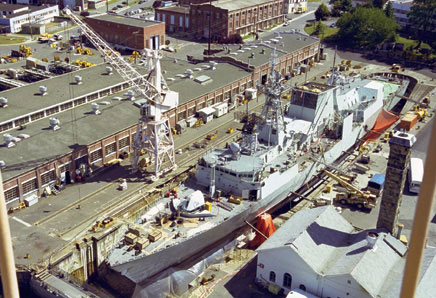
As for longer term thinking, maybe parents can nudge a wayward child or two (who might not seem so interested in post-secondary education) into NSCC’s welding program with the promise of working on “cool” warships.
If that’s the strategy however, I’d look just as closely at programs offering things such as Construction Management, Carpentry, and Electrical if trying to take advantage of career opportunities in Halifax.
Why consider trades? Well who are the main employers are in Halifax? Government agencies/Crown Corporations, Educational institutions, and Health Care. Now what state are they in?
My pessimistic side has allowed me to wonder a couple of times – both before and after Halifax was announced as winning the bid – if it’s awarding might merely serve to keep the town afloat. In the face of the decimation of jobs in other fields that occupy larger portions of our workforce than building fancy boats – it’s a fair consideration.
Announcements of cuts are coming daily it seems, since the recent federal and provincial budgets were handed down.
Outside of that, factor in the demographics of boomers retiring, and a shortage of skilled workers to replace them, and there’s a case for working in the building trades. They might be the only jobs to be had in couple years. Blue collar jobs, building housing for blue collar people moving to town to .. fill blue collar jobs.
——————————————————————-
Where does this leave Halifax right now?
There are plenty of building projects – residential and commercial – taking place in Halifax these days. Some of the projects that developers are pushing through are no doubt related to or at least encouraged by the shipbuilding contract; whereas others had been in the planning stages for years before the announcement.
Canadian Home Mortgage Corporation (or CMHC) data is very useful for getting an idea of what kind of construction is taking place, at least as far as the residential sector is concerned. The bottom line is that there are more residential projects in progress here – about 20% higher than average. A helpful analysis of that data was reported in the Chronicle Herald in late February.
It’s harder to find data on Commercial and Industrial projects and starts, as there isn’t a government agency such as CMHC reporting on them. In fact, if you ask CMHC about it – which I had an opportunity to do recently – they will point you in the direction of CBRE – only the world’s largest commercial real estate firm.. They do have an office in Halifax. Their most recent report, released in late November 2011 details transactions and starts in the Halifax area, and also projects “sustainable” growth.
Having said all that, if you travel around HRM to any extent, perhaps you’ve noticed the numerous projects under way in the Burnside Industrial Park, and in Bayers Lake. The data only supports what one can see about town.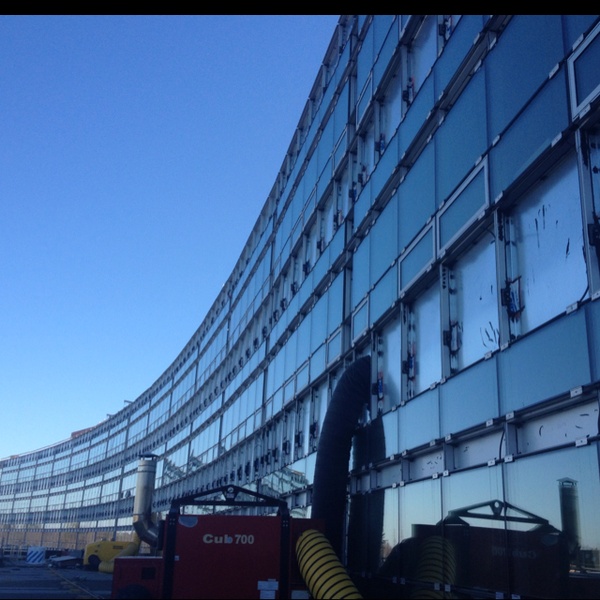
Maybe if City Hall can stop pissing off developers and residents alike with it’s waffling on “HRM by Design”, even more exciting development can be encouraged downtown, to help increase density, contain sprawl – and give more people a reason to want to be on the peninsula. I spoke about this and more, in my first ramble on development in Halifax here.
Since that last post, gasoline has risen over 20 cents a litre. Glad I’m not commuting from Mount Uniacke anymore. Allan Street with my 30 mpg average (realized, not advertised) runabout is still doing me just fine.
Patrick Leroy of United Gulf Developments may be on to something here. Mixed, affordable housing with integrated commercial space downtown, where people can be encouraged to leave their cars parked as often as not.
So far, the points raised this time around have taken the local economy into consideration, as well as the effects of fiscal constraint on the provincial and federal levels. Nothing much as changed in the international economy either – The U.S. is still struggling, as is the E.U.
—————————————————————-
Six months after the announcement, I’m not as convinced that we are about to realize some “upward spiral” or catalyst, but maybe I’ll settle for the typical Halifax economy, insulated from the highest of highs,and from the lowest of lows as the world moves on around us.
For now, I wont lament the fact I haven’t quite landed in either journalism or education.
I probably could use a writing course or two, however.
Thanks for reading.
I like to think that I’ve been very fortunate over the years to earn a reasonably broad range of skills and experience.
Few of those experiences gained have been as rewarding as my time working in the film industry over the past decade. I owe many thanks to a good friend who introduced me to the business in 2001 (thank you, Matt).
Since that point, I’ve worked on about ten features, television series, shorts, commercials as well as independent productions. All of this work has seen me travel to Vancouver, where I have either lived or travelled to in order to work on productions. This has occurred at various points in my life since 1999.
These days I’m settling more into living permanently in Halifax, but the occasional project may lure me away for a few weeks…
My industry work has consisted of various roles within the Art / Construction Departments of productions. Mainly it has been as a Carpenter, but I’ve also worked as a Construction Driver, Welder, Crane Operator and Labourer.
I’m fortunate to have been able to apply myself at my highest levels to the various productions I’ve worked on, and to have earned responsibility and trust that’s proved to be invigorating.
Without hesitation, I’ll say that some of my very best work outputs – whether it’s in the quality and precision of pieces I’ve built, the performance in demanding environments and conditions, or the results when changes were needed (and fast..) during a shoot – have come from my industry work.
My time spent owning a small business for residential general contracting; and currently working in commercial construction as a Carpenter and Glazier with a reputable Halifax company – have been the other environments that have and will continue to push my limits.

The day we stood “The Wicker Man“, August 26th 2005 – 60 feet tall, two months to produce, transport to location on Bowen Island, B.C. and assemble.
 The head was large enough to house Nicolas Cage’s character before his ultimate sacrifice. I spent a week alone working on the interior of this, 63 feet above ground.. quite a view.
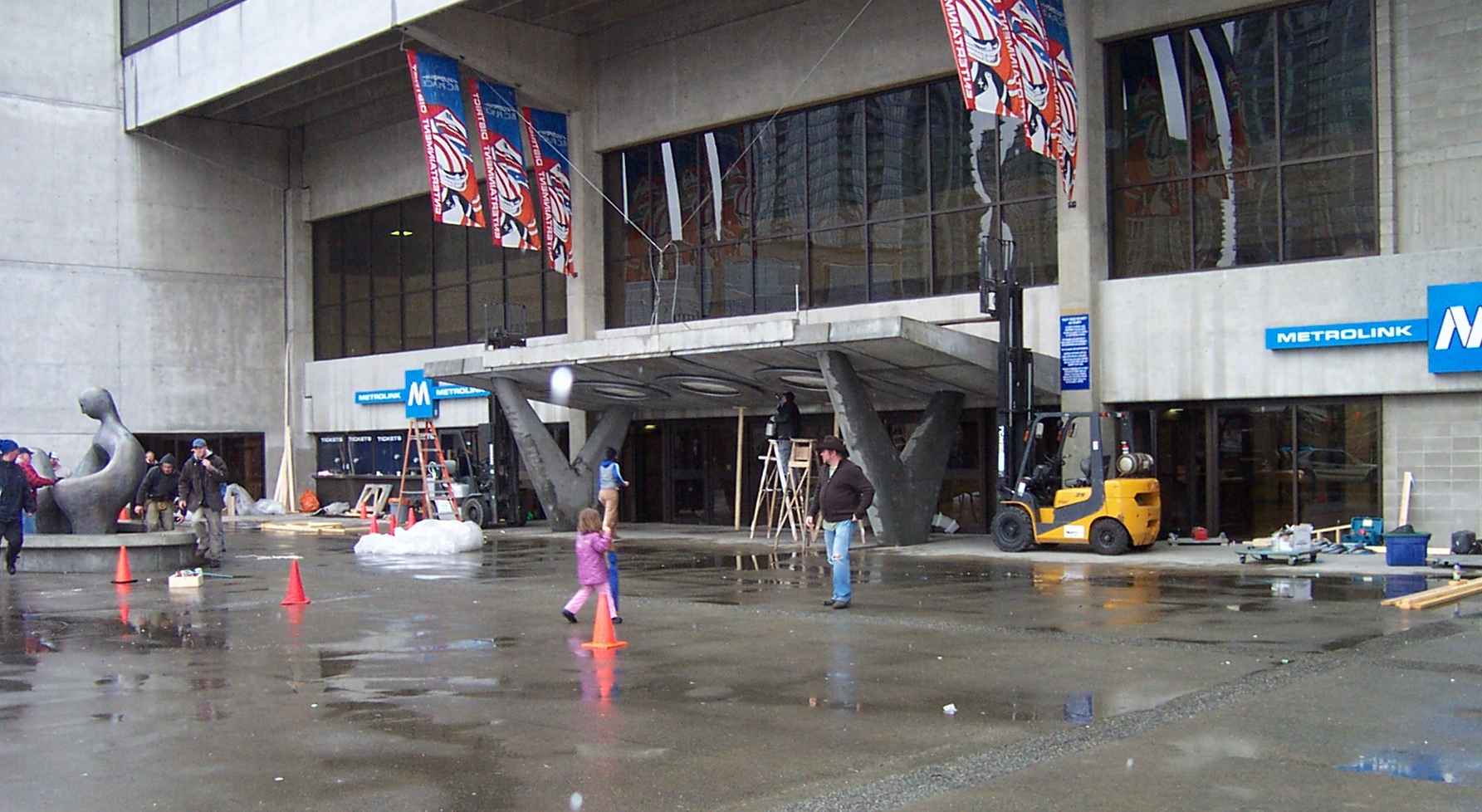
 B.C. Place entrance, before our work to make it appear to be the entrance of a train station.
Production: The Butterfly
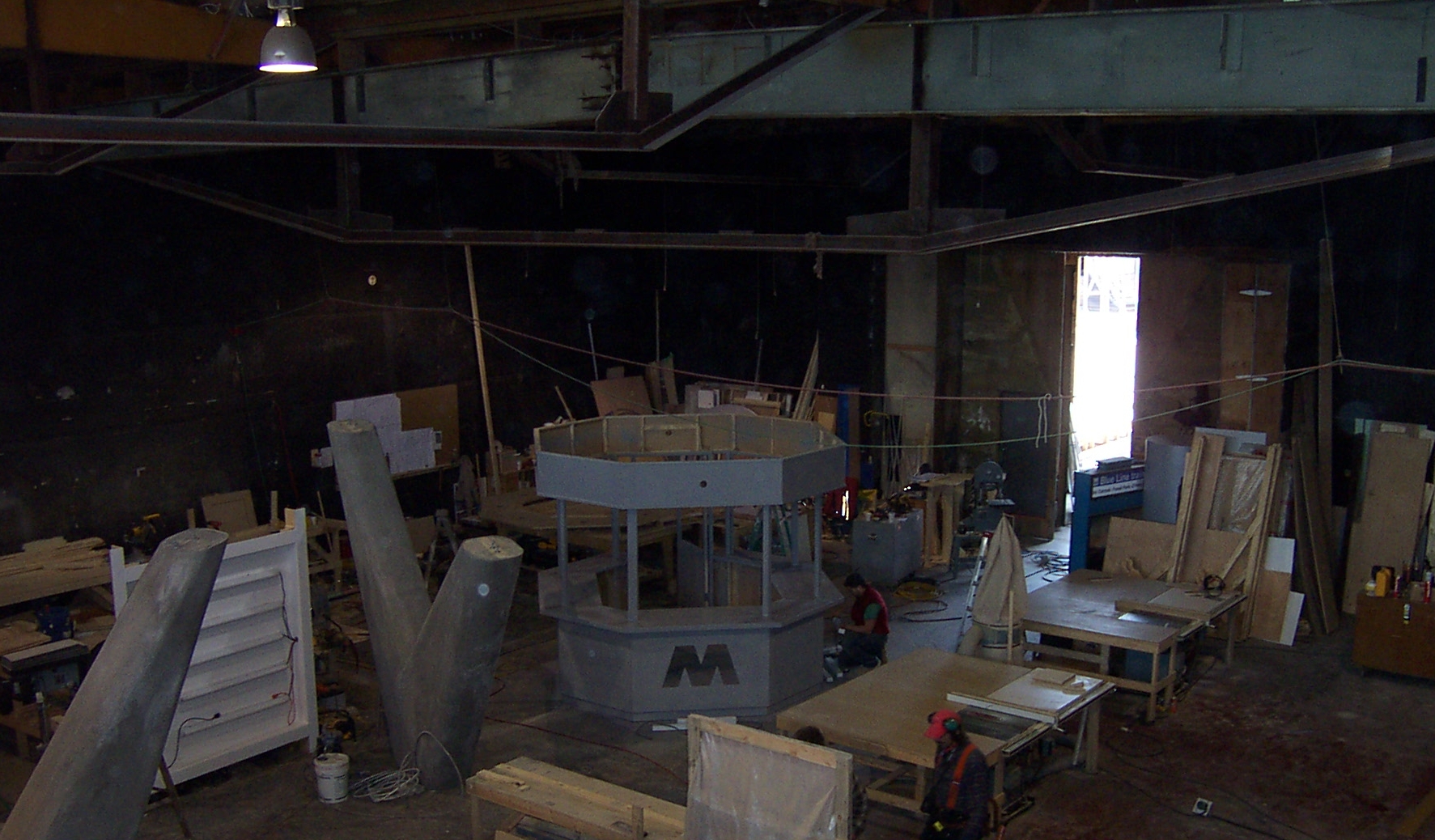 Building the pieces that will become the “Metro Link” station entrance, and installation work.
..and (below) you can see in this shot that the exterior appearance of the various sets is all business. This was taken at the main studio set build for Endgame (2011). I was waiting for my turn to rip some wall “skins” at the table saw.

——————–
These are just a few shots from various productions. My resume for the industry details exactly what work I’ve done, and now it’s time for me to see what I can generate in my hometown.
Thing is, Halifax has seen a boom in recent years in Film production, and I’m keen to get involved.
That will involve going through the motions with the IATSE local here (849), and possibly the CMG to gain membership and potentially work on maritime-based productions that involve those unions. The verified work I have already done in B.C. will qualify me as a member in one of them here. I hope the local production schedule will remain busy enough to allow me a shot at it.
The other avenue I’ll follow involves the CBC. I’m a huge fan of various CBC offerings – even if it’s more Radio One.
I’m ready to volunteer my time on either front to see what connections I can make here.
The results of which I will detail in part 2 of this post.. here’s hoping!
Thanks for reading.
Now that my time in Natuashish is over, I’ve wondered how best to start my final words on the subject.
I’ve been very humbled by the amount of visitors my first post on the subject generated. Being picked up by the folks over at Labrador Wild was something I certainly never expected.
Thanks to all who have dropped by and for the private messages I’ve received. I’ll try and do this follow-up justice.
—-
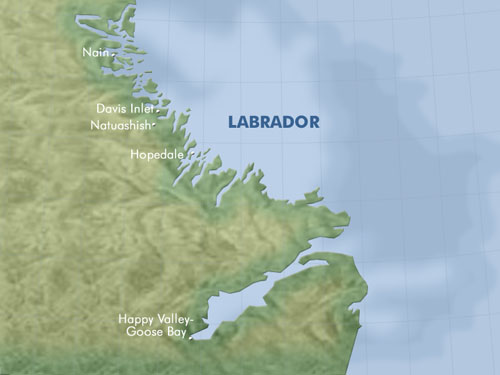
Right, so here again is Natuashish – in answer to complaints that I wasn’t very specific concerning it’s location. It is at 55 degrees latitude, not quite the arctic circle, but certainly farther North than I’d ever been, a roughly 10 degree increase in latitude over my home in Halifax, N.S.
Labrador uses Atlantic Standard Time, which was convenient for me.
My tenure there ran from Oct 25th to November 18th. Those of us sent there were working on a new Recreation Centre for the community. The hours were long – 13 hour shifts typically, and we worked every day.
That stretch was nothing nothing to some of the people the company sent there.. The original group were there for a total of 10 weeks – and save for the occasional sick day here and there, they worked every single day of it. My hat is off to them.
——
Two recent developments have added poignancy to this post for me, both of them ongoing.
For one, the ongoing story in Attawapiskat (summarized well here) relates in several ways to what occurred to the Mushuau Innu in Natuashish – and the Davis Inlet community that preceded it. There are many relevant and poignant stories to be found using terms like “Davis Inlet” or “Mushuau Innu” in the search engines. Two difficult to imagine, yet important ones for better understanding can be found here, and here.
While I will say that it is my belief that the problems Natuashish – and many other indigenous communities in Canada – face are directly related to promises that the Canadian and/or provincial governments broke (or didn’t deliver upon fully), I really prefer to focus on the positives that I saw first-hand.
Some good things are happening for Natuashish.
As in so many other challenged regions, a large focus has to be upon the children. Seems to me that if you give them something constructive to do, some viable options for them to spend their time upon, you might be able to help break the cycles that damaged previous generations. I’m not exactly qualified to weigh in on this too much, but thankfully professionals of all variety are on the ground there working with the community to improve things.
While the schools built in Natuashish face ongoing challenges, I did meet dedicated teachers there who want to make progress. Adding to that, there are other projects under way which will help provide the amenities and recreation that we enjoy in most typical Canadian communities.
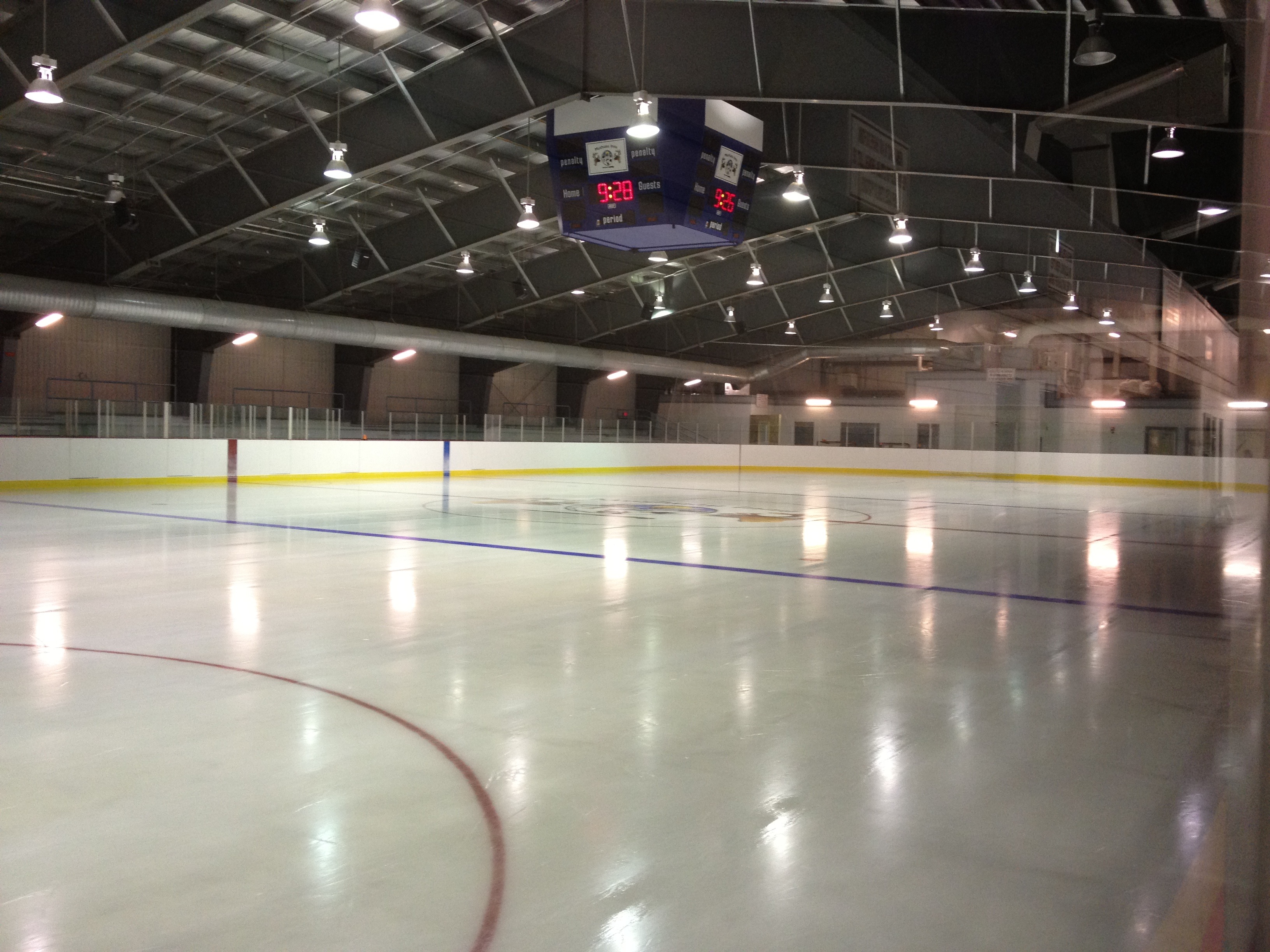
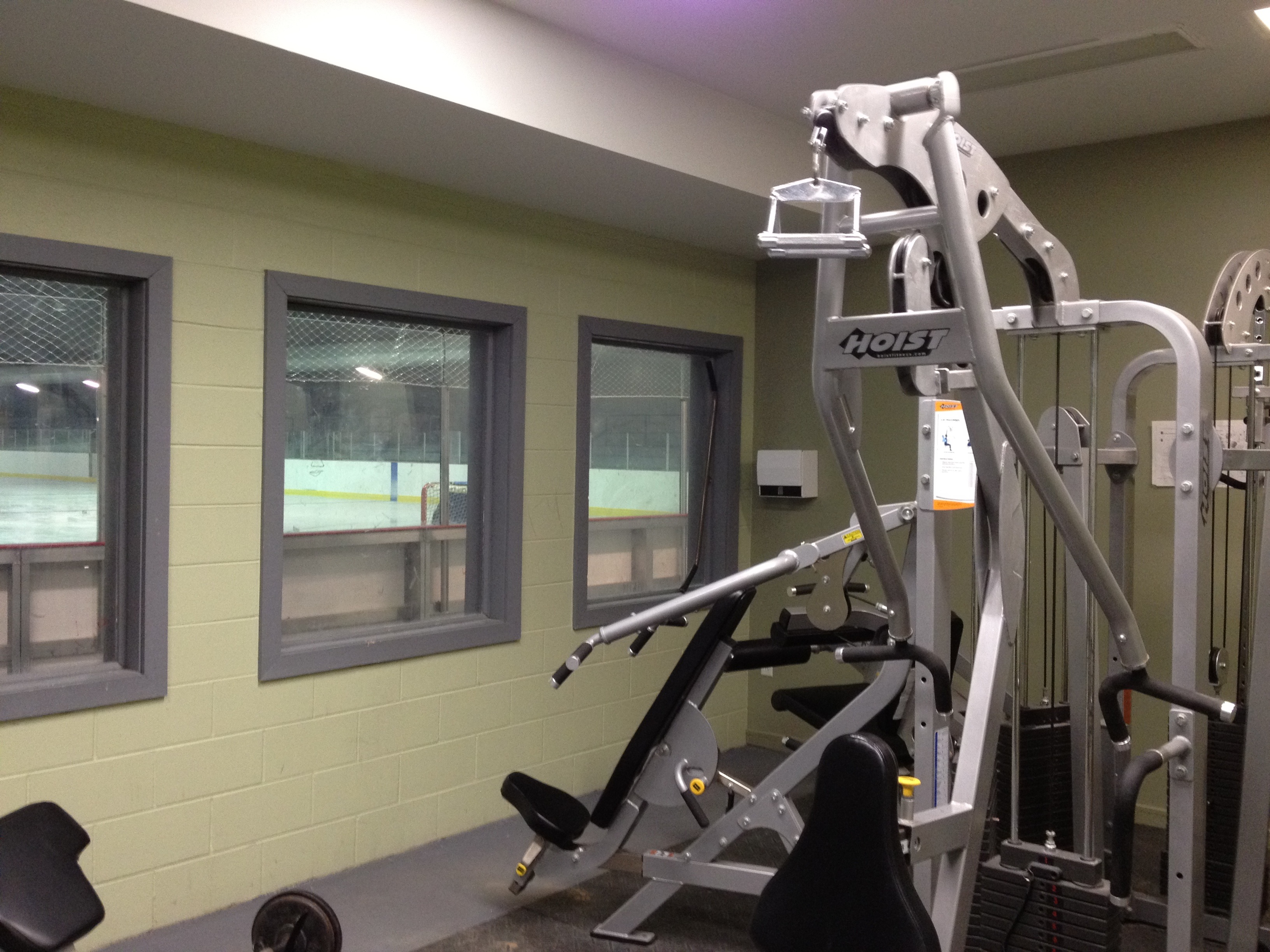
Completed a few years ago, a decent Ice rink exists in Natuashish. It contains all of the facilities you’d find at a typical community arena. There are local teams, and two coaches come into town on a rotation to help build skills. There is a league from what I understand, and the team hosts, as well as travels to other communities for games.
The rink is part of a larger recreation complex, an addition to which we were working upon during our time in the community.
——
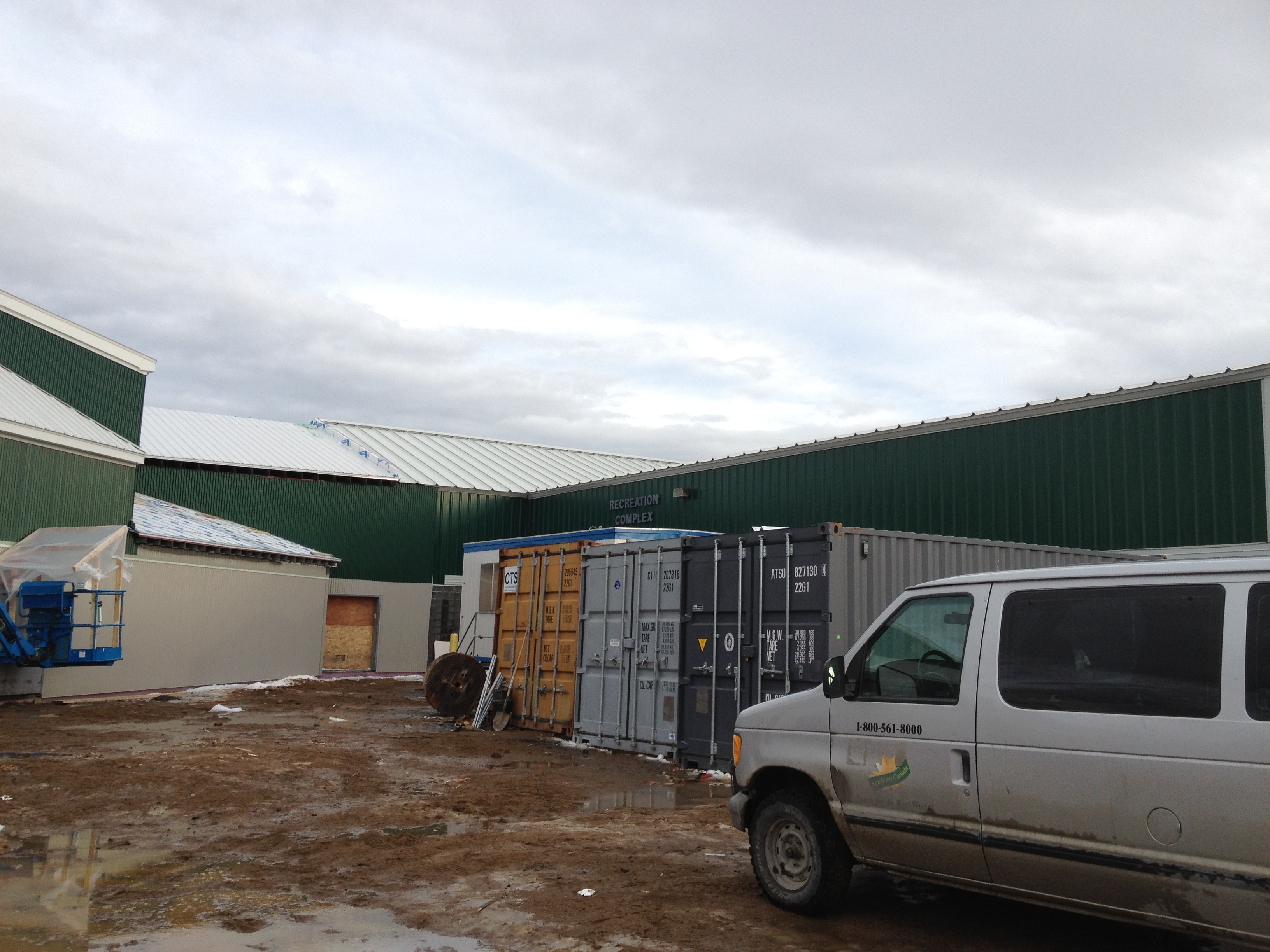
Lots of sand in Labrador..
There is an outside chance that I will return to Natuashish in 2012 to help on a project to build a number of new homes. I’ll certainly comment more on that if the situation does come about, but now I’ll speak a bit more about the experience of being in the community itself.
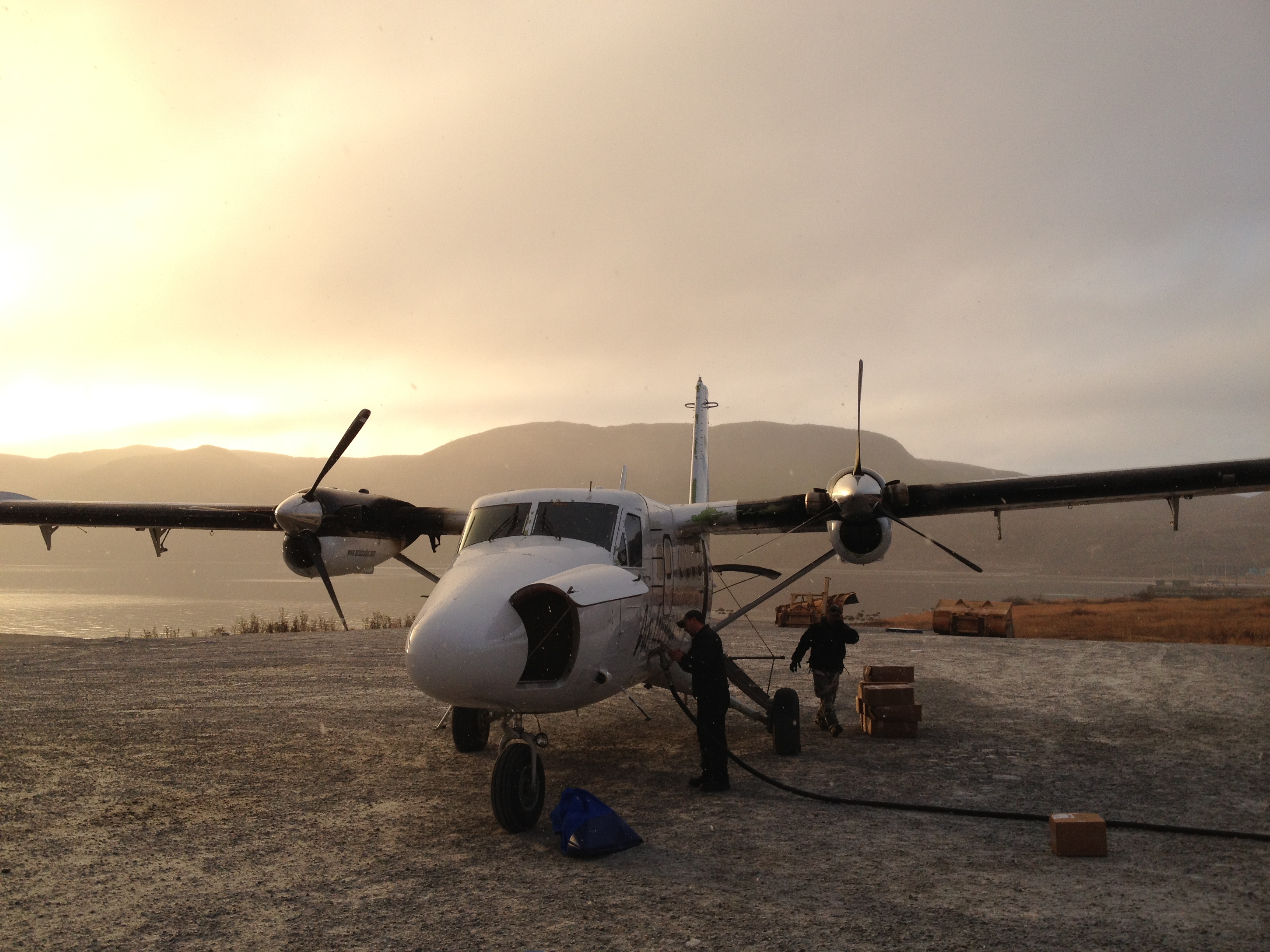
First of all, there are only two ways into Natuashish, by air and by sea.
Bulk cargo, supplies and fuel are shipped into the town’s port, while smaller cargo, residents and visitors fly into the local airport.
 Twin Otters are quite the aircraft. I had never flown in anything quite as small, and I gained some additional respect for the pilots who can get them in and out of small community airports, as if it were a walk in the park.
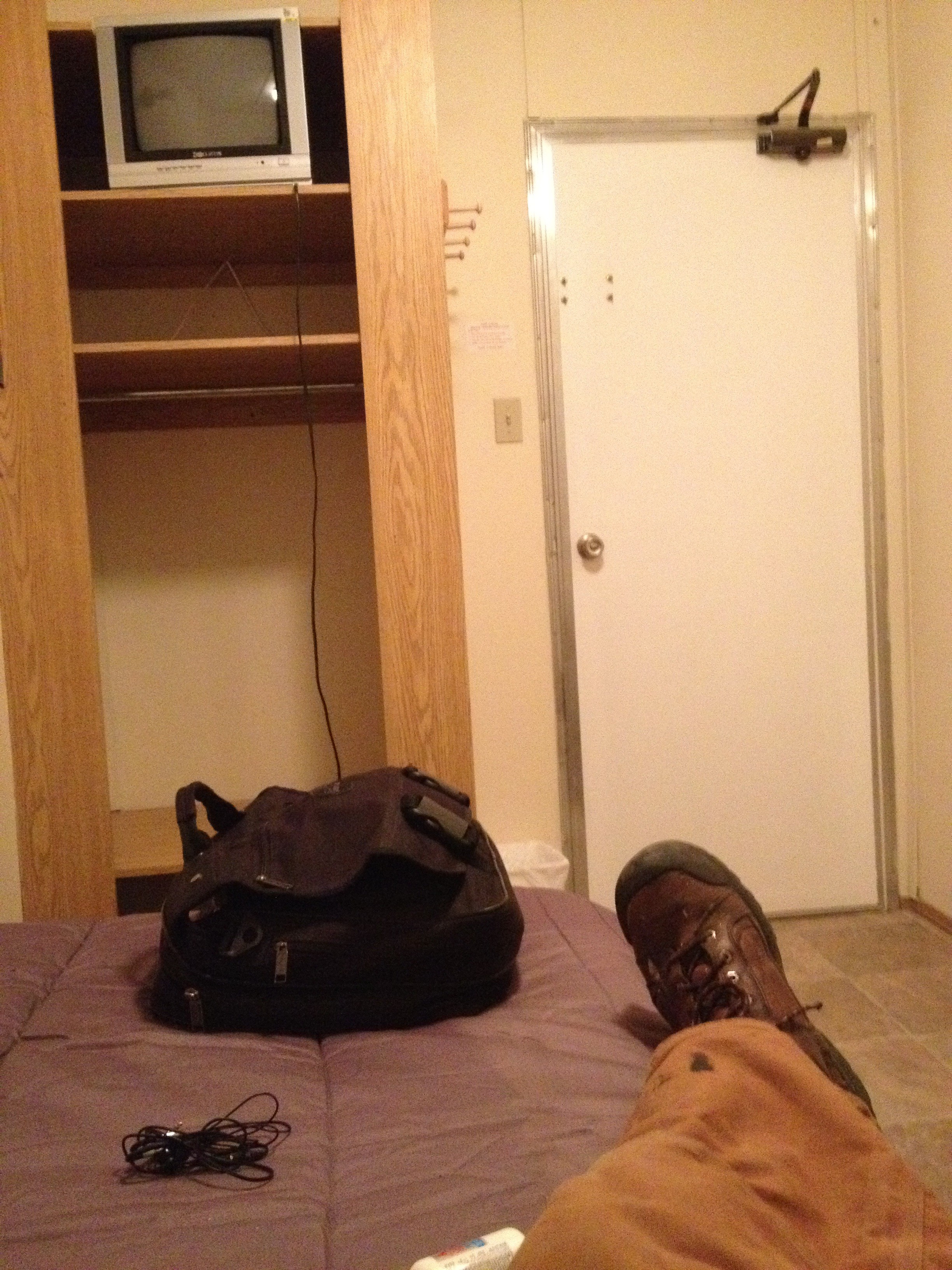
Our accommodations in the town consisted of a bunkhouse, one component of a complex that also included a general store, motel and cafeteria. We had private rooms, which were small but comfortable.
The cafeteria served as a bit of a games room after working hours. Some of the crew played Cribbage or “Chase the Ace” to pass the evenings occasionally. I’d join in once in awhile, but typically only came out for a snack or to watch hockey on the satellite-fed big screen television.
Most nights I relaxed in my room watching movies or television series’ I’d brought with my laptop for the journey. Considering the challenge of our work schedule, that was often enough for the couple of spare hours I had to myself.
I did make use of the gym facilities at the recreation complex occasionally however, and the few times we were able to use the ice were certainly fun.
——-
Considering that I left Halifax in late October with the temperature in the mid-teens, there was an adjustment to the weather in Natuashish.
The average temperature while I was there was around the freezing mark, with it dipping several degrees below often at night. Being on the coast of the Labrador Sea, we experienced some dampness and wind. It snowed or rained for a portion of almost every day.
Those conditions aren’t so difficult taken on their own, but the roofing and siding materials we were working with consisted of thin gauge steel – something you cannot work with effectively in the snow.
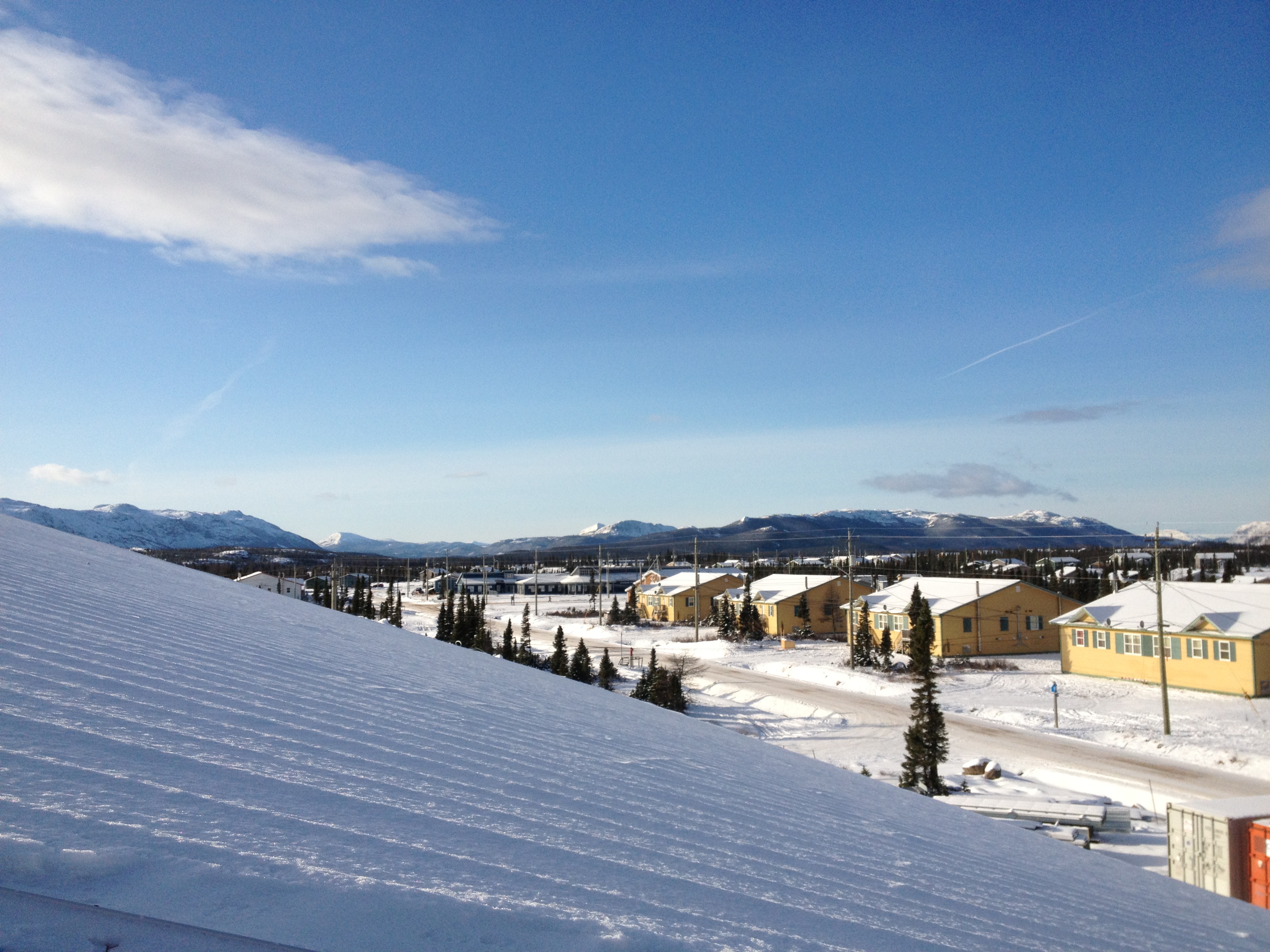
The foreman for our crew did a great job of coordinating our work to suit the conditions. This allowed our productivity to remain high, and ensured the work was of a good quality. Certainly the right person for the job.
——
Natuashish is not a place to be if you don’t like dogs. There are lots of them in town.
I’d guess there are at least 250 of them in the community, and many of them are free to wander. Ownership seems to be loosely defined.
Mostly it seems to be Huskies, but there are many breeds of dog there – some of which don’t necessarily seem well suited for the winter weather.
Occasionally authorities remove some in cases of illness or aggressive behaviour – but most of the dogs seem fairly tame.
Our job site was no exception to this. Over the few weeks that we were there, no less than dozen dogs visited with us, some repeatedly.
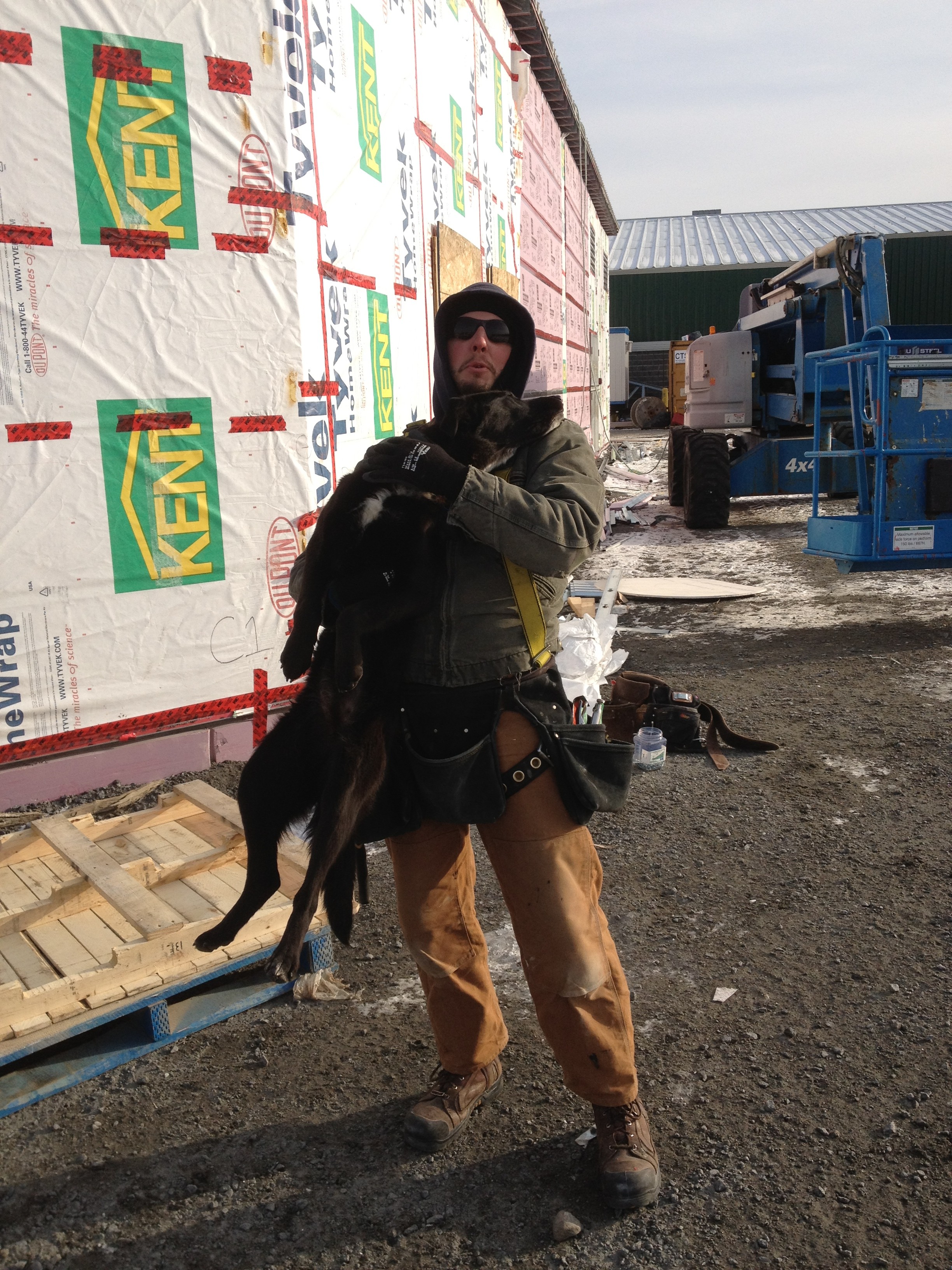 They figured out we were easy marks to score a meal from. Many of them benefited from food we would bring back for them from the cafeteria after lunch and supper.
——–
Evenings on site were certainly eventful, and posed a challenge for the crew.
Considering our latitude, daylight hours were certainly shorter than in Halifax. The effect of this was intensified for us when Daylight Savings Time came to an end. At that point sunset was typically around 4:30pm.
We would leave for Supper at 5pm, returning quickly to set up flood lights and do our best to remain productive. We would save certain procedures for the evening hours, in order to remain safe. Use of the lifts and machinery was limited, what work we could do at ground level, we saved for the evenings.
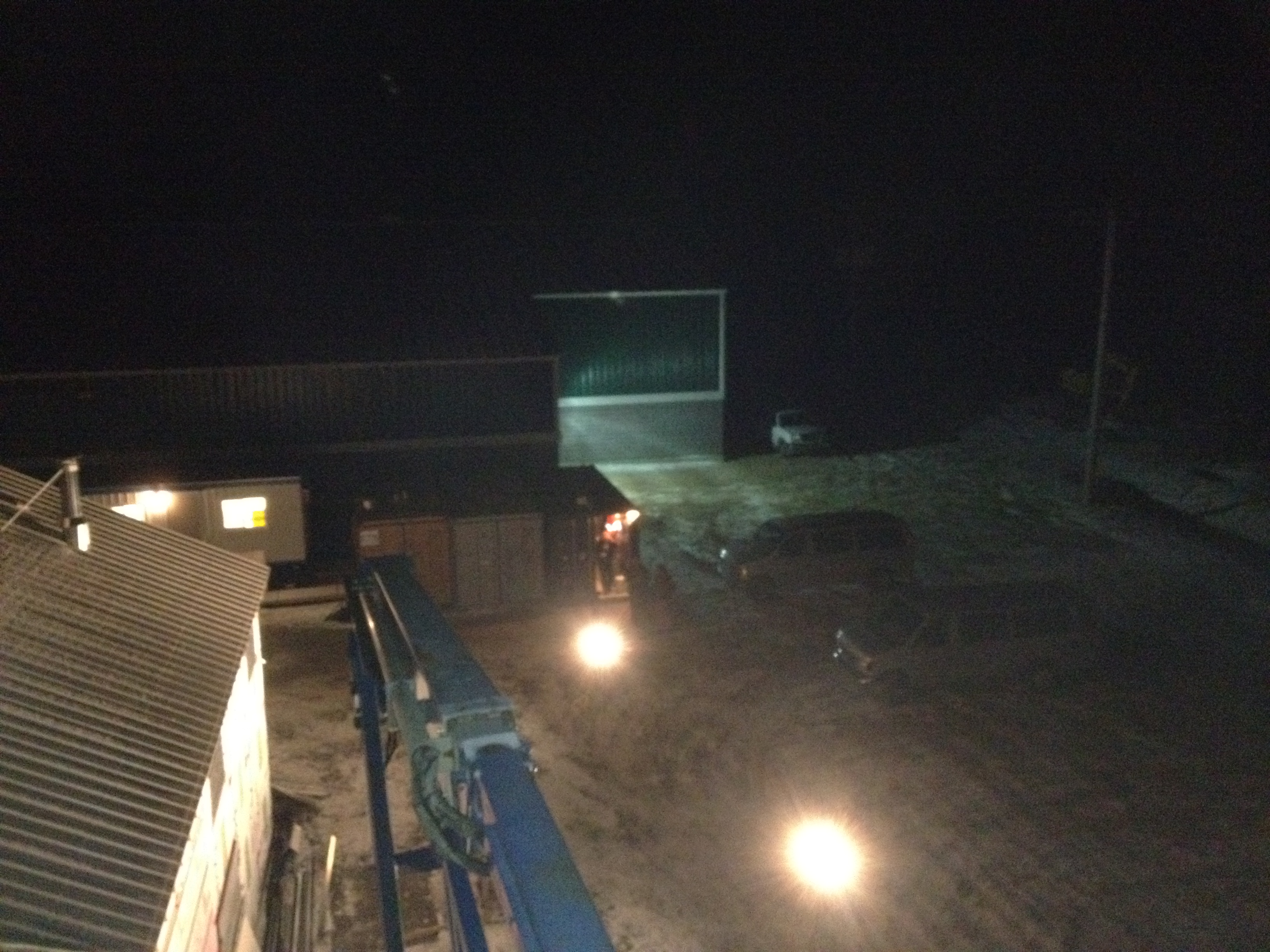
Another challenge with the evening work was the children.
The adjacent arena complex had various programs and skates for all ages, which would naturally attract a good number of families and children.
Some of them found it great fun to visit the site, enter the building we were working upon, and run around.
While this was for the most part harmless, we obviously had a responsibility to ensure the safety of people on site. It was a regular event for several of the crew to have to stop and chaperone the kids, explaining what we were doing, and ushering them safely away from the machines and materials.
They are a fearless bunch, not much we were up to scared them. They would have hopped right into the lifts with us and tried to use the power tools.
——
Getting back to events that added some relevance to this post – it’s worth mentioning the recent agreement that’s bound to have a huge effect on Labrador’s Innu, the New Dawn deal.
This agreement works to provide the Innu Nation in Labrador with a percentage of profits from the upcoming Muskrat Falls hydroelectric project (which is certainly of interest to Nova Scotians as well), and other compensation for the flooding of hunting lands during construction of the original Churchill Falls facility.
Other benefits of the New Dawn deal include title to a significant amount of land, hunting and fishing rights on even more.
Some worry about the effect the influx of money will have. One can only hope the work that is taking place in the communities now will help ensure wise decisions are made which will benefit the residents in the long term.
Thing is, there are a lot of indigenous communities in Canada that are in trouble. The news being made in Attawapiskat may just be the beginning. I have a feeling we are going to hear about several other communities also facing crisis in the upcoming months and years.
While I don’t necessarily believe it’s appropriate or fair to compare any two indigenous communities – especially when it involves different nations and cultures – government treatment (mistreatment) over the years often has been the same.
Perhaps the lessons being learned now in Natuashish, what works, what doesn’t, and the skills administrators and professionals of all stripes are learning as they go will better prepare those who would help out other communities in need.
Something tells me I just may find myself in a similar situation again in the future, after all.
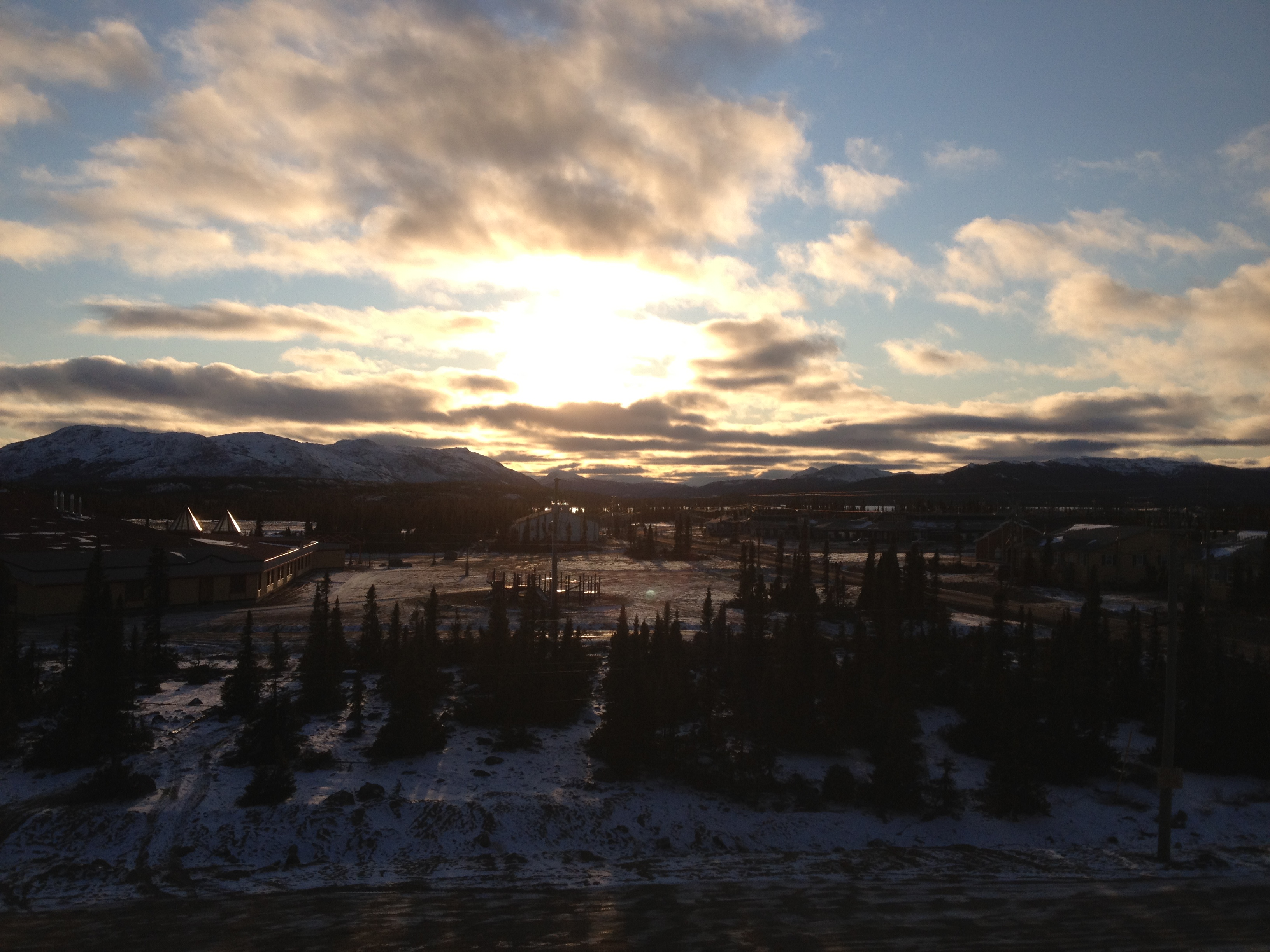
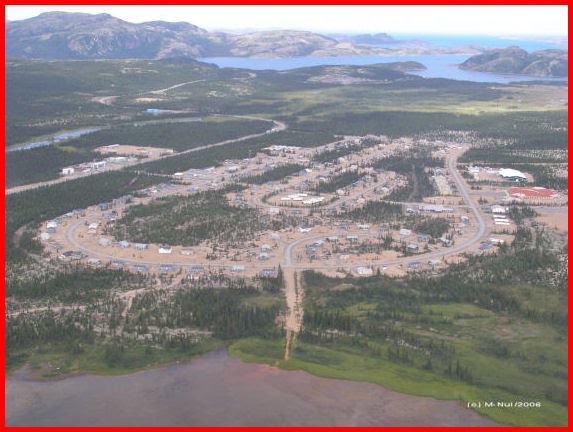
I flew into northern Labrador on Tuesday, Oct 25th, 2011.
The company I work for has been contracted to help build various community centres and housing for the Mushuau Innu that now call Natuashish home.
The history of Natuashish is short; the community has only been inhabited for nine years. It was built to replace Davis Inlet in an attempt to help the Naskapi Innu who were facing severe social crises – brought on largely by previous government interventions and relocations.
From one point of view, it might be best for me to leave this one alone. My ability to dig deep into these subjects and to communicate with the local population is severely restricted.
Then there is the fact that I’m not an investigative journalist. I might like to pretend that I do a little freelance reporting here and there, but that’s not quite my reality. I have no mandate to do such things, and I could end up causing trouble for myself and for my employers if I’m not smart about it.
Having said that, I do hope that over the course of the month that I’m able to generate something insightful. This is definitely a contrast to my life in Halifax, and to the lives of most of the people I know.
I’m working on collecting pertinent information about the region and it’s recent history. Especially that history as impacted by the largely European descendants who have exerted influence on the Innu way of life.
I can say this: I see positive signs – but there is a long road ahead in many respects.
For the my coworkers and myself, that involves up to 30 straight days of work, typically 12 hours a day. For some, the total number of days will exceed 50.
This will be a challenge on many levels. Three days in, so far so good.
— October 27th, 2011. 11:22pm
I remember sympathizing with the plight of landowners – and their advocates – during the widening of Chebucto Rd in 2008.
The flash point of the protests was big news for our somewhat dozy city, yet I recall my reflections at the time being marked by a sense of futility.
On the one hand, I felt that the city’s desire to improve flow on the Armdale Rotary was a foolish idea. Perhaps others can weigh in here, but I know that it still isn’t fun trying to navigate either Chebucto Road or the Armdale Rotary at Rush hour. Even if, as the city asserted in their case for widening, that 300 more cars can get through there at peak hours – has that really helped the situation? Some light research (okay, Googling) doesn’t reveal much. Anecdotal evidence only thus far – mine.
Now on a different tack, you might think that more mass transit and some encouragement to avoid driving into the peninsula and/or downtown whatsoever would be ideal.
That would be great, but problem is – we have this wonderful legacy of ..a non-legacy. Namely, the fact that there hasn’t been much for urban planning here until very recently.
Too many people have decided the Suburbs are for them, or their wallets did. We have this sprawl, that recently has been served by cloning Bayers Lake with the recent developments of Dartmouth Crossing, and the Bedford Common. Not a bad idea to serve the satellite or bedroom communities that have popped up, but they do nothing to help increase density and reduce travel into and out of peninsular Halifax.
The point is, even if HRM might sprawl out in geographic size similar to some of the bigger cities in Canada, the population just isn’t there. You can’t make a case for expanding Metro Transit as much as we might all like.
I know I for one sure miss the SkyTrain in Vancouver. If we quadrupled our population (Greater Vancouver had over 2 million people as of 2006) maybe we could have a SkyTrain too. Or a “fast ferry”? We’ll have to wait and see what the survey says as far as possible solutions to the transit scenario are concerned.
—
Now to change the tone somewhat.
Some people have said to me that our economy is insulated somewhat from the ups and downs that some of the bigger Canadian cities experience, especially in the labour market. We don’t quite get the booms, but it doesn’t often go completely bust here either. I know personally, that it’s a bittersweet message. We lose a lot of our best young people to other markets due to a lack of variety in the jobs available.
Often the money in the jobs that are here is lacking, frankly. That doesn’t help.
It’s the same scenario whether you’re working in trades, or if you’re a university graduate with a large debt load to service in those conditions. It’s certainly on my mind at times as I hang off the side of the new RCMP HQ in Burnside, installing sealed unit glass. I make a significant amount less working here as I did in points western.
To make my own situation as efficient and cost effective as possible, I’ve moved onto penisular Halifax, I only drive my small 30 mpg (average) coupe to work, and I walk for everything else. The Quinpool Rd area is fantastic for that, and I love it.
Before I bring all of the above points together into something cogent, I will say – I’m fortunate to have a decent job with great benefits. With what is happening in the world economy in recent years, we all should be “circling the wagons” somewhat, and trying to get our expenses and debt in order. Oh, and don’t get too comfortable.
—
So, how is it exactly that we move forward? Since we still seem to be caught up in this collective deception (albeit in our own way) that we must have economic growth to succeed or prosper as a society – what do we do? How do we fill all this “empty space” in HRM? Whether it’s through retaining our best and brightest, attracting qualified immigrants, or even shifting the migration patterns withiin this country from West to East – is there one magic solution?
Can we do it in an environmentally sustainable manner while we’re at it?
I think the closest thing to one magic solution is the $35 billion in shipbuilding contracts that several prominent shipyards across Canada are competing for. You might have heard about it. If you haven’t, welcome back from under your rock. Here’s what our charming Mayor, Peter Kelly had to say about it last week. Here’s the provincial government’s cheer-leading.
You can find a lot of articles on the competition across the country. Differing perspectives and reasons abound why specific yards should get the main $25 billion dollar contract – the best summary I can think of is this:
Since we in Nova Scotia were collectively ..railroaded in 1867 – when all of our economic activity on the eastern seaboard was curtailed, and the money starting heading west to “Upper Canada” (I could make another blog post about this alone, but will leave it alone for now..) Has there been a better opportunity to help this region recover? Not just Halifax, but the province and region as a whole? I don’t think so. Keep your fingers crossed.
Signs are pointing to another downward spiral for the world economy. This time the EU would seem to be the catalyst – they have reached a critical moment and if they don’t get their economic issues sorted out, look out.
The shipbuilding contract – even the smaller $8 billion one would help insulate us in this region. What happens if we get one of them?
The HRM will start adding people. It will retain it’s young workforce, attract other Canadians to our wonderful region for a change, and qualified immigrants will want to come here in increasing numbers. Consider it an upward spiral, a catalyst for this region hopefully regaining it’s rightful economic place within our confederation.
As long as we maintain our participation in the capitalist, corporate driven model, this is the best thing that could happen.
Then you just might finally be able to get an Express Bus or other form of efficient, rapid transit from the nether regions of Suburbia to Downtown – or to the shipyards perhaps?
Hopefully it doesn’t require the need to widen Bayers Road, which perhaps won’t do anything but cause a repeat of the mess in 2008. Can’t we do better?
Thanks for reading..
Let me get something straight right off the bat. I am not a Hippy.
In fact at first glance, “they” typically dismiss me as another one of the “sheeple”, quite detestable. I get contemptuous looks often in return for my smile as I pass various hipsters on the sidewalk.
Lots of reasons for this perhaps, but it might boil down to the fact that I don’t walk around in hemp clothing, unshaven. My sense of style screams “Proletariat Worker Drone”. When I’m not in work clothes, I’m wearing cheap sweat shop clothes or random cheapies from Winners. My goal is typically not to stand out either way – for being over dressed or for being blatantly grungy.
I like to think it’s substance over style for me, but I’m biased. It’s ok, when I have these mildly negative encounters, I simply try to focus on empathy and on not being spiteful, and then it doesn’t irk me as much. Who knows what kind of shit they deal with day to day. Probably involves being broke though, and I sympathize.
Not quite related, fun diversion:
Josh Homme of Queens of the Stone Age comes to mind here; He and some of his musical partners in crime were featured on the travel show “No Reservations” recently with Anthony Bourdain, discussing the Desert Rock music scene and described it thus: “..it’s like Hippies, but with showering..”.
Anyway..
My carbon footprint is something that I have been lowering significantly in recent years; I continue to do so as I evolve and as my priorities change.
My teenage years were largely marked with a sentimental, and mostly irrational love of 1970’s Ford Trucks. My earliest memories were of being my Grandfather’s passenger as he went about his modest contracting business, and years after he passed I never forgot them.
By the time 2005 rolled around, I transformed that folly into using a 1976 F250 4×4 that I rebuilt in Vancouver as I went about various sole proprietor carpentry adventures. Trick is, I ran the truck on Propane, or LPG.
LPG, very similar to Compressed Natural Gas or CNG – is a much cleaner burning – and in the western part of Canada – a much cheaper fuel than dirty old Gasoline. I took pride in this fact as I ran what was then a 30 year old truck using a very efficient, cheap and clean fuel system (emissions are akin to that of a compact car) to be the workhorse of my business. Yes it’s still a fossil fuel, but perhaps the best of a bad situation – at least as I understood it at the time.
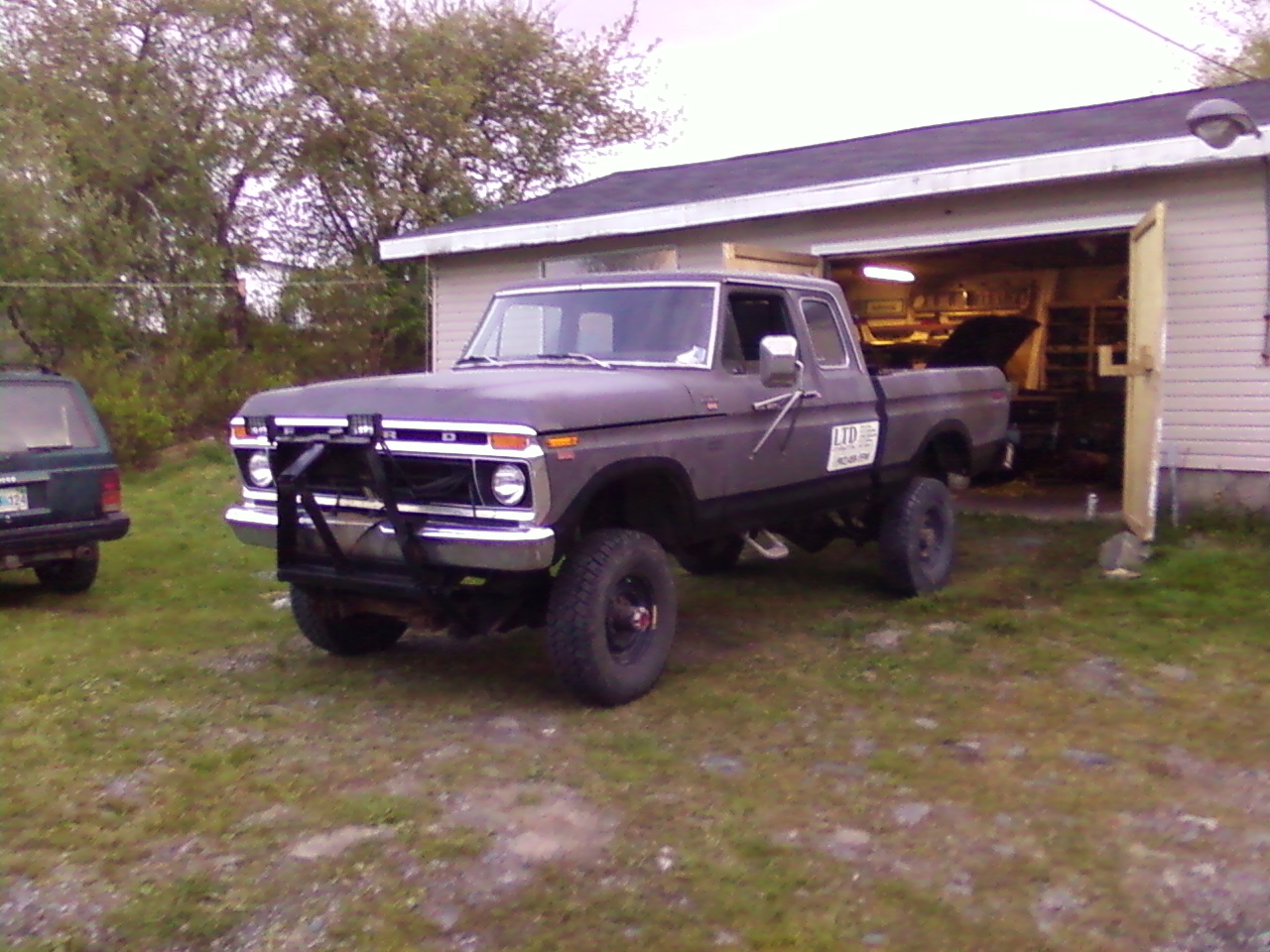 In 2007 I returned to the Halifax area, and was very discouraged by the lack of availability and price gouging of LPG as a motor fuel in Nova Scotia.
My disgust over the LPG situation led me to explore other alternative fuels, and discovered that many of the commercial alternatives out there such as E85, are a bad joke. Good quality farmland that should be used for food, being used to produce ethanol? No thanks. E85 is no cleaner, and burns less efficiently than gasoline.
Whatever the crops used for fuel, they shouldn’t be using arable farmland. They shouldn’t be grown in competition with Food crops, the prices of which continue to skyrocket. Some simple Googling will make this clear, don’t take my word for it.
—
In a more positive turn, I stumbled onto this site:
While the presentation is kind of hokey, the message is clear – produce your own clean burning fuel, in a relatively easy and sustainable way. The cost is quite manageable, and you don’t end up competing with food crops on good farmland.
In a nutshell: Build a still – yep, just like one for moonshine. Difference is, your making alcohol that is close as possible to 100% pure. 80-90% is more realistic. You can use any feedstock – weeds, kitchen scraps, etc that can be grown or generated just about anywhere – not prime farm land – and the mash gets turned back into the soil as the best kind of fertilizer you could use. Hence the term “Permaculture”.
I gotta give a nod to Guy Earle of Frank Magazine here. I admit I don’t know much about him so far beyond what I’ve read in the past few issues of Frank Magazine, but I was definitely surprised to see him write about the history of Alcohol fuel and David Blume in his column in the most recent issue of Frank, #621. Go get it. Never mind the article, the magazine period kicks some serious ass and should be standard reading for anyone who lives in Halifax.
Beyond all of this, I’ve seen the plans and the instructions, and I’m game to get involved with this whenever the pieces fall into place. I have construction and machinery experience/education sufficient to build these, but not being a land-owner or having an excess of extra capital to just go out and do this on my own, it’s something that’s filed under “post-armageddon survival techniques” for this guy for now.
—
As for what alcohol fuels me? Well It would typically be Sleeman’s Original Draft or Miller Genuine Draft in the summer, but once Hockey season and colder temperatures arrive – It’s Forty Creek Rye all the way. Just a double with Water, please. Wine is a relatively newer treat for me, usually saved for the company of women.
—
These permaculture concepts might dovetail nicely however, with some of the Organic Food businesses in town. It so happens that I just moved near the one on Allan Street.
The proprietor is quite busy however, and seeing me coming in my sweat shop clothes, interrupting his busy day – I haven’t felt the most welcome. That and we had a parking issue on day one (mixup on the part of our landlord) that got his back up right off the bat. I’ve been working in my way to be a good neighbour, time will tell.
I certainly respect the business and it’s goals – and also look to be a good customer – if I ever feel more welcome.
Again, empathy and a lack of spite.. I try to be patient when my various energies don’t get the best of me.
Thanks for reading,.
Yeah, just to get past that first post – and fast – I’m going to talk about the weather.
Considering it hit about 25 C here in Halifax today – the warmest turkey day weekend I can remember – it’s worth a mention.
I got out of the house a fair bit over the last couple of days, trying to enjoy as much of it as possible. Considering we had frost in many areas just a couple of nights prior, the contrast was something much appreciated by many – judging by the people I seen about town.
Highlights for me included flying kites with my sister on the Commons on Saturday, and some alone time on a green space close to my flat on Allan St @ Windsor.
It seems we hardly had a summer here, with all of the wet and cool weather Halifax received through to the middle of August, when we got a late reprieve of sorts.
Among my jaunts out of town to run errands and pick up my aforementioned sister, walks around Quinpool Rd and area; I think the most enjoyment I had out of the weekend came from a much simpler endeavor:
Sitting at a picnic table on the modest green space (bordered by Windsor, Parker and Welsford Streets) – I read some of the October issue of The Walrus ( http://www.walrusmagazine.com ), went over some writing I’m working on – and arrived at the decision to start this very blog.
Considering my work typically involves exposure to the elements – often suspended in the air off the side of buildings under construction – I cherished the day – and the fact there are a few more days of good weather in our forecast.
http://www.weatheroffice.gc.ca/city/pages/ns-19_metric_e.html
Next post: Organic foods, alternative fuels and the average Haligonian.
 Haliflux - Discovery and evolution in Halifax NS